
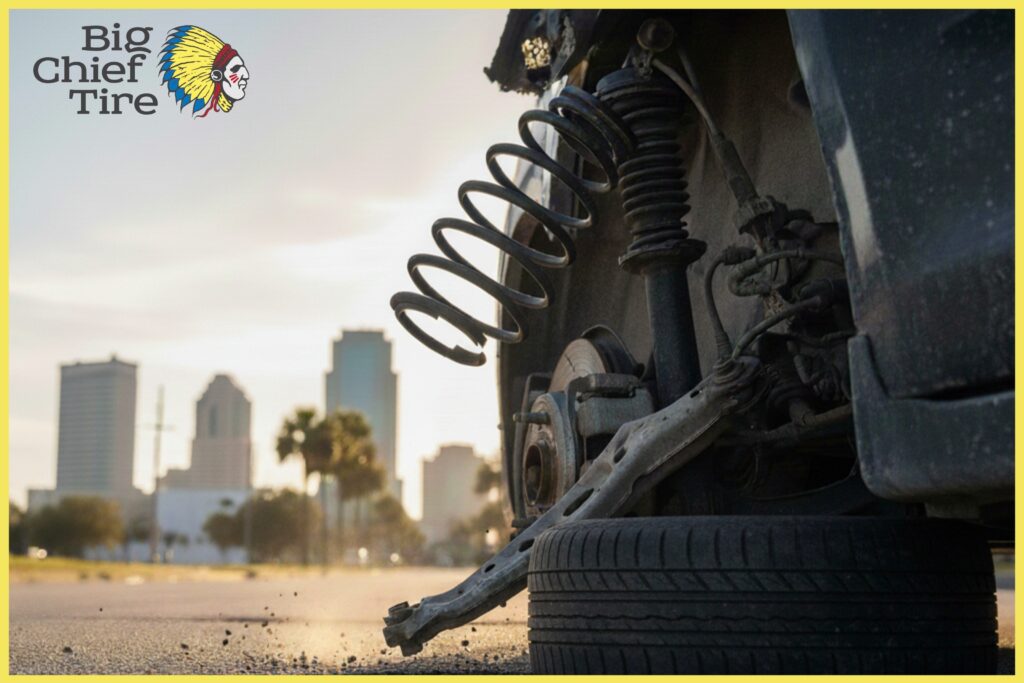
Your vehicle’s suspension does far more than cushion bumps. It plays a critical role in keeping your tires firmly planted on the road, maintaining steering stability, and supporting safe braking. When suspension components begin to wear, the issue shifts from ride comfort to a serious auto repair concern that affects safety, handling, and long term repair costs.
Many Jacksonville drivers miss early suspension warning signs because the changes feel gradual. A slightly rougher ride, a small pull in the steering wheel, or uneven tire wear often gets ignored until the damage becomes expensive. Knowing what to watch for helps you address suspension problems early, before they affect tires, alignment, or braking performance.
This guide explains ten common warning signs of suspension trouble, why they happen, and when a professional auto repair inspection becomes necessary.
10 Vital Signs Your Suspension Is Failing
1. Excessive Bouncing After Hitting Bumps
When you drive over speed bumps or potholes, your vehicle bounces repeatedly like a trampoline instead of settling immediately. This classic symptom indicates worn shock absorbers or struts that can no longer control spring movement.
Shocks and struts contain hydraulic fluid that dampens oscillation. When internal seals fail, fluid leaks and the component loses damping ability. Beyond the uncomfortable ride, this extends braking distance because tires lose consistent road contact. In emergency stops, extra bouncing can add several feet to your stopping distance, especially dangerous in wet conditions.
2. Nose Diving When You Brake
The front end drops dramatically when you apply brakes, particularly during hard stops. This happens when front shocks or struts can no longer control weight transfer during braking.
Nose diving affects more than comfort, it extends stopping distances by 20-30% because rear tires lose contact pressure while front suspension compresses excessively. This makes rear-end collisions more likely in stop-and-go traffic. The problem also accelerates front brake pad wear since they’re absorbing more force than designed.
3. Vehicle Pulls or Drifts to One Side
Your car constantly drifts left or right on straight roads, requiring steady steering pressure to maintain direction. Several suspension failures cause this: collapsed springs creating uneven ride height, worn control arm bushings allowing wheel misalignment, or damaged strut mounts affecting wheel angles.
Beyond the mental fatigue of constant correction, pulling causes rapid uneven tire wear, often destroying tires in 10,000 miles instead of their expected 40,000-60,000 mile lifespan. This symptom typically requires wheel alignment after suspension repairs to restore proper geometry.
4. Uneven or Accelerated Tire Wear
Inspecting your tires reveals unusual patterns: excessive edge wear, diagonal wear across the tread, or cupping, a scalloped, wavy pattern around the circumference. Different patterns indicate specific failures. Edge wear suggests misalignment from worn ball joints or collapsed springs. Cupping means failed shocks allowing excessive bounce. Feathering points to severe toe misalignment from damaged tie rods.
Replacing tires without fixing underlying suspension problems wastes money, new tires develop identical wear patterns within months. Uneven wear also compromises wet-weather traction, dramatically increasing hydroplaning risk.
5. Clunking or Knocking Noises Over Bumps
You hear distinct metallic knocking, clunking, or rattling from underneath when driving over rough pavement. These sounds indicate worn bushings, failed ball joints, or loose mounting hardware. Ball joints fail when protective rubber boots tear, allowing contamination. Worn bushings create metal-to-metal contact producing audible clunking.
While annoying, these noises often signal components approaching complete failure. A separated ball joint causes immediate wheel control loss, the wheel can literally detach while driving. The sound location helps diagnosis: front-end clunking suggests ball joints or strut mounts, rear clunking indicates worn bushings or broken sway bar links.
6. Oily Fluid Leaking Near Wheels
You notice dark, oily fluid on shock absorbers or struts, or fluid pooled beneath the vehicle near wheels after parking. Shocks and struts contain sealed hydraulic fluid. When seals deteriorate from age and constant movement, fluid escapes, sometimes slowly causing visible wetness, or rapidly creating puddles.
Leaking shocks have lost damping ability. As fluid escapes, air replaces it, and air compresses, making suspension ineffective. This causes excessive bouncing, poor handling, extended braking distance, and accelerated wear on other components. Leaking worsens over time and doesn’t repair itself.
7. Difficulty Steering or Loose Steering Wheel
Steering feels heavier than normal, requiring extra effort to turn. Alternatively, the wheel feels loose with excessive play, you can turn it several degrees before the vehicle responds. Heavy steering indicates binding strut bearings or damaged upper mounts. Loose, wandering steering suggests worn tie rod ends, failed ball joints, or severely worn control arm bushings.
Steering problems represent serious safety hazards. Delayed response in emergencies, like swerving to avoid collisions, can mean the difference between accident and safe maneuver. At highway speeds, wandering steering demands constant attention, creating driver fatigue and accident risk.
8. Vehicle Sits Lower on One Corner
From a distance, one corner sits noticeably lower than others, making the car appear to lean or sag. A collapsed or broken coil spring typically causes this. Springs support vehicle weight and maintain ride height, when they fail, that corner sinks.
Beyond aesthetics, uneven ride height creates handling imbalance. The lower corner carries more weight, causing that wheel to work harder and wear faster. The vehicle pulls toward the sagging side, especially under acceleration or braking. Uneven spring height also throws off suspension geometry, leading to accelerated tire and suspension wear throughout the system.
9. Steering Wheel Vibration at Highway Speeds
At speeds above 50-60 mph, you feel vibration or shaking through the steering wheel. While wheel balance problems commonly cause this, suspension issues produce similar symptoms. Worn strut mounts allow excessive movement transmitting vibration to the steering column. Failed wheel bearings create rough, grinding vibration that increases with speed.
Persistent vibration accelerates wear throughout steering and suspension systems. Components not designed for constant oscillation, like steering rack bushings and tie rod ends, wear prematurely. More critically, severe vibration can indicate wheel bearing failure approaching the point where wheels could lock or separate at highway speeds.
10. Rough, Harsh Ride on Smooth Roads
Your vehicle feels every minor road imperfection, expansion joints, slight pavement variations, and tar strips create jarring impacts. Roads that previously felt smooth now seem rough, and passengers complain about discomfort.
This indicates multiple worn components. Worn shocks and struts lose impact absorption. Deteriorated bushings no longer cushion metal-to-metal contact. Aged springs provide less compliant support. The entire suspension system can no longer isolate the cabin from road imperfections.
Beyond discomfort, harsh rides signal that suspension can no longer protect the vehicle’s structure from impact damage. Repeated jarring accelerates wear on exhaust systems, body mounts, and interior components.
Can You Drive With Bad Suspension?
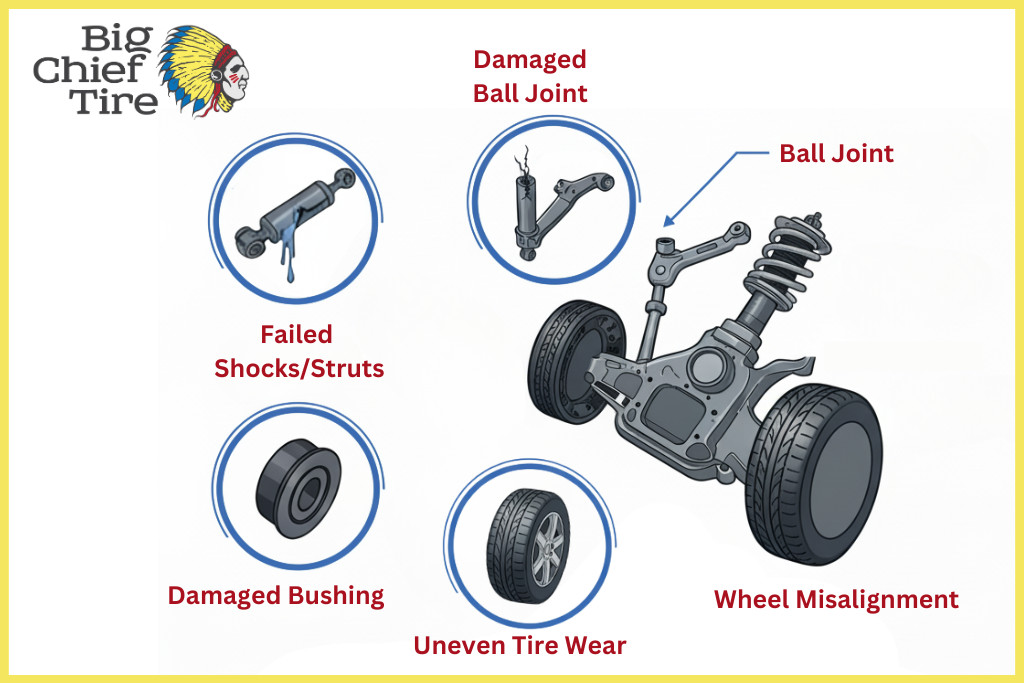
Driving safety depends on how severe the suspension symptoms are. Based on what our tire shop technicians commonly see during inspections, there are three general situations that help determine what to do next.
- If symptoms are mild, short term driving is usually possible. This includes slight bouncing after bumps, a rougher ride than usual, or minor fluid seepage from shocks or struts. Even in these cases, auto repair service should be scheduled soon to prevent additional wear on tires, alignment, and steering components.
- Driving should be limited and inspected promptly when issues such as nose diving during braking, vehicle pulling, clunking noises over bumps, noticeable vibration, or a sagging corner appear. These signs indicate reduced vehicle control and increased safety risk if ignored.
- Stop driving immediately if steering feels loose, loud banging or crashing noises occur, wheels appear crooked, or the vehicle bottoms out frequently. These conditions signal suspension components that are close to failure and can lead to loss of control if driving continues.
Scheduling professional suspension services ensure issues are diagnosed at the component level and corrected before they compromise safety, tire life, or steering response.
What Happens If You Don’t Fix Suspension
Ignoring suspension problems creates a cascade of damage. Failed shocks destroy ball joints and control arms through excessive movement. Worn bushings allow wheels to shift, throwing off alignment repeatedly. Uneven tire contact accelerates tire wear dramatically.
The financial impact compounds over time. A $400 shock replacement caught early prevents $1,500 in additional damage that occurs when failed shocks destroy other components over subsequent months.
More critically, compromised suspension affects braking performance and vehicle control, safety risks that far outweigh repair costs.
Professional Suspension Diagnosis at Big Chief Tire in Jacksonville, FL
When suspension warning signs appear, a professional inspection identifies the exact components involved and prioritizes repairs based on safety and condition.
Big Chief Tire has served Jacksonville drivers for more than 60 years, providing honest diagnostics and reliable auto repair services. Our technicians use advanced inspection and alignment equipment to evaluate suspension wear accurately and recommend repairs that make sense for your vehicle.
With BCT locations across Westside, Southside, Northside, Mandarin, Blanding, and Orange Park, we help drivers address suspension issues before they turn into major safety concerns.
Schedule your full auto repair inspection and drive with confidence knowing your suspension is properly evaluated.
Frequently Asked Questions
Is it safe to drive with a “clunking” noise in my suspension?
A clunking noise usually indicates metal-to-metal contact from a failed bushing or ball joint. If a ball joint fails completely, you could lose control of the steering or the wheel could detach. It is highly recommended to have any new suspension noise inspected immediately.
Can bad suspension ruin my new tires?
Yes. If your suspension is worn, your tires won’t stay flat on the road. This leads to “cupping” or uneven wear that can destroy a brand-new set of tires in as little as 10,000 miles. Always check your suspension before investing in new rubber.
How often should I have my shocks and struts checked?
Generally, you should have your suspension inspected every 50,000 miles, or sooner if you frequently drive on rough roads or notice a change in ride quality. In Jacksonville, high humidity and heat can also accelerate the wear on rubber bushings and seals.
Why does my car “nose-dive” when I hit the brakes?
“Nose-diving” occurs when your front shocks or struts are no longer strong enough to support the vehicle’s weight during a stop. This is a major safety issue because it takes weight off the rear tires, significantly increasing your total stopping distance.
