

Introduction:
Every driver in Jacksonville wants a vehicle that feels safe, smooth, and reliable. Modern cars use a mix of mechanical parts, sensors, and computer systems. That means small changes in how the vehicle feels can point to important issues.
This guide explains the primary auto repair services your vehicle depends on. It shows what each service includes, what can go wrong, and which warning signs you should not ignore.
The goal is to help you understand your car better and feel more confident when you visit a full-service auto repair shop.
Understanding Modern Auto Repair: What Drivers Often Overlook
Modern vehicles do far more in the background than most drivers see. Control modules constantly monitor engine operation, braking, stability, steering angle, and many other signals. When one part drifts out of range, the system often compensates for a while before failing.
This is why problems rarely start with a complete breakdown. They usually begin with a small change. A slight vibration at one speed. A brake pedal that feels softer than usual. A warning light that comes on, then disappears. These are early signs that a system is beginning to move outside its designed operating range.
Good auto repair begins with diagnosis rather than guesswork. Technicians use scan tools to read trouble codes and live data, then combine that with physical checks of parts, wiring, and fluids. When this process is followed, repairs become accurate, and repeated issues are reduced.
Routine inspections help catch these early shifts so they can be corrected before they turn into larger repairs.
Core Auto Repair and Maintenance Services That Keep Your Car Moving
Every vehicle depends on a group of systems that work together each time you start the engine, press the brakes, or turn the wheel. When you bring your car in for service, technicians focus on specific areas that directly influence safety, performance, and long-term reliability.
Below is a clear breakdown of the core auto services drivers rely on and what is addressed during each one.
1 Brake Inspection and Repair
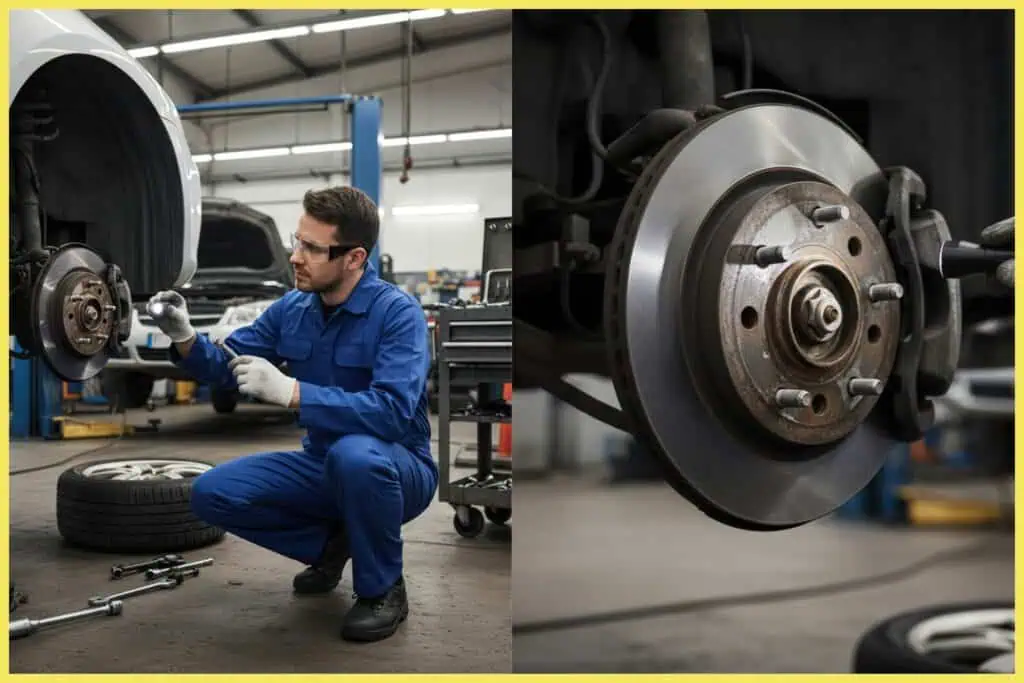
A complete brake repair service involves far more than checking pad thickness. During an inspection, the pads, rotors, and calipers are evaluated together to see how well they are working as a system.
Heat spots, glazing, or uneven surfaces on the rotors show that braking force is not being distributed correctly. Caliper movement is also checked, because a sticking caliper overheats one side and wears components prematurely.
Brake fluid condition is another key part of the service. Since fluid absorbs moisture over time, its boiling point drops, and the pedal can feel soft under hard stops. If the ABS or brake warning light is on, the wheel-speed sensors and electronic control signals are also tested.
2 Wheel Alignment Services
An alignment service resets the wheel angles so the vehicle tracks straight and the tires meet the road evenly. Camber, caster, and toe are measured with alignment equipment, allowing small corrections that restore stability and smooth steering. Even a slight shift in one angle can cause the steering wheel to sit off-center or the car to drift.
Every day driving can alter these settings, potholes, curb impacts, and worn suspension components gradually push the wheels out of specification. Once the angles are corrected, the vehicle rolls more efficiently, tire wear normalizes, and handling returns to how the manufacturer designed it.
3 Tire Services
Tire care includes rotation, balancing, flat repair, and replacement. Rotation positions each tire where it will wear more evenly, allowing the full set to last longer.
Balancing eliminates vibrations caused by uneven weight distribution around the wheel, which protects both ride quality and suspension parts.
When repairing a flat, the tire is removed and inspected from the inside to confirm that the puncture is safe to repair and not affecting the sidewall. A proper repair seals the damage from both sides.
When installing new tires, correct mounting, inflation, and lug torque are essential for performance and safety. TPMS sensors are also checked so pressure readings remain accurate after service.
4 Suspension and Steering Repair
Suspension and steering components work together to keep the vehicle stable over bumps and responsive during turns. As parts like control arm bushings, ball joints, tie rods, and shocks age, they develop looseness or leaks that affect how firmly the tires stay planted.
A suspension evaluation looks for excessive movement in joints, worn bushings, leaking struts, or parts that are no longer maintaining alignment while the car is in motion.
Once worn components are replaced, the vehicle regains proper balance and handling, and the tires wear evenly again.
5 Engine Diagnostics and Check Engine Light

Engine diagnostics combine electronic scanning with mechanical testing. When the check engine light appears, the engine control module stores data that helps pinpoint the source.
Sensors controlling airflow, ignition timing, fuel delivery, or emissions are reviewed to see which one is providing incorrect readings.
Technicians study live data such as fuel trims, temperature readings, and sensor signals to find faults like worn spark plugs, intake leaks, or failing oxygen sensors.
If the light is flashing, it often means active misfires that must be corrected immediately to avoid damaging the catalytic converter.
6 Oil Change and Fluid Services
An oil change removes old, degraded oil and replaces it with fresh oil that protects the engine from friction and heat. The filter is also replaced to keep contaminants from circulating through the system.
During this service, other fluids, coolant, transmission fluid, brake fluid, and power steering fluid are also checked to make sure they remain clean and at proper levels.
Coolant condition affects engine temperature control. Brake fluid absorbs moisture over time, which affects pedal feel. Transmission fluid supports smooth shifting and should not smell burnt or appear discolored. Fluid care reduces the risk of overheating, shifting problems, and brake fade.
7 AC Repair and Cooling System Services
AC auto service focuses on refrigerant levels, compressor performance, and airflow through the condenser and cabin filter. Low refrigerant or weak compressor operation often causes warm air at idle or inconsistent cooling. Leak checks, pressure testing, and component evaluation help determine the cause of poor cooling.
The engine cooling system works closely with the AC. Radiators, thermostats, hoses, and cooling fans are checked when temperature readings rise or coolant levels drop. Ensuring both systems work correctly prevents overheating and keeps cabin temperatures comfortable.
8 Battery, Starter, and Charging System
Electrical reliability begins with a strong battery. During a starting and charging system check, battery voltage and reserve capacity are evaluated to confirm that it can supply power.
The starter is checked for proper cranking speed, and the alternator is tested to confirm it is charging the battery correctly while the engine runs.
If lights flicker, the battery drains quickly, or electrical accessories behave unpredictably, these evaluations help identify whether the issue is with the battery, the alternator, or internal wiring.
9 Exhaust and Emissions Services
The exhaust system guides gases away from the engine and helps manage emissions. Inspections include looking for leaks, damaged sections, and worn sensors that control fuel mixture accuracy.
Problems like a failing oxygen sensor or a weakening catalytic converter often trigger warning lights or cause rough running.
Repairing leaks, replacing worn components, or correcting sensor readings helps the engine burn fuel more efficiently and reduces emissions problems.
10 Tune-Up Services
A tune-up helps the engine maintain smooth performance by replacing parts that weaken over time, such as spark plugs, filters, and ignition components. As these items age, the engine may idle roughly, hesitate during acceleration, or deliver lower fuel efficiency.
A tune-up restores proper airflow, fuel delivery, and ignition strength so the engine runs cleanly and responds the way it should. Drivers often notice improvement in starting, acceleration, and overall engine stability once worn parts are updated.
11 Preventive Maintenance Programs
Preventive maintenance brings all major systems together into a regular checkup. Brakes, tires, fluids, suspension components, the battery, belts, and hoses are reviewed for early signs of wear. This approach finds issues while they are still minor and inexpensive to fix.correctly. Caliper movement is also checked, because a sticking caliper overheats one side and wears components prematurely.
Brake fluid condition is another key part of the service. Since fluid absorbs moisture over time, its boiling point drops, and the pedal can feel soft under hard stops. If the ABS or brake warning light is on, the wheel-speed sensors and electronic control signals are also tested.
A structured maintenance plan keeps the vehicle predictable and reduces the likelihood of sudden repairs. It helps Jacksonville drivers stay ahead of breakdowns and maintain long-term reliability.
Common Warning Signs Drivers Should Not Ignore
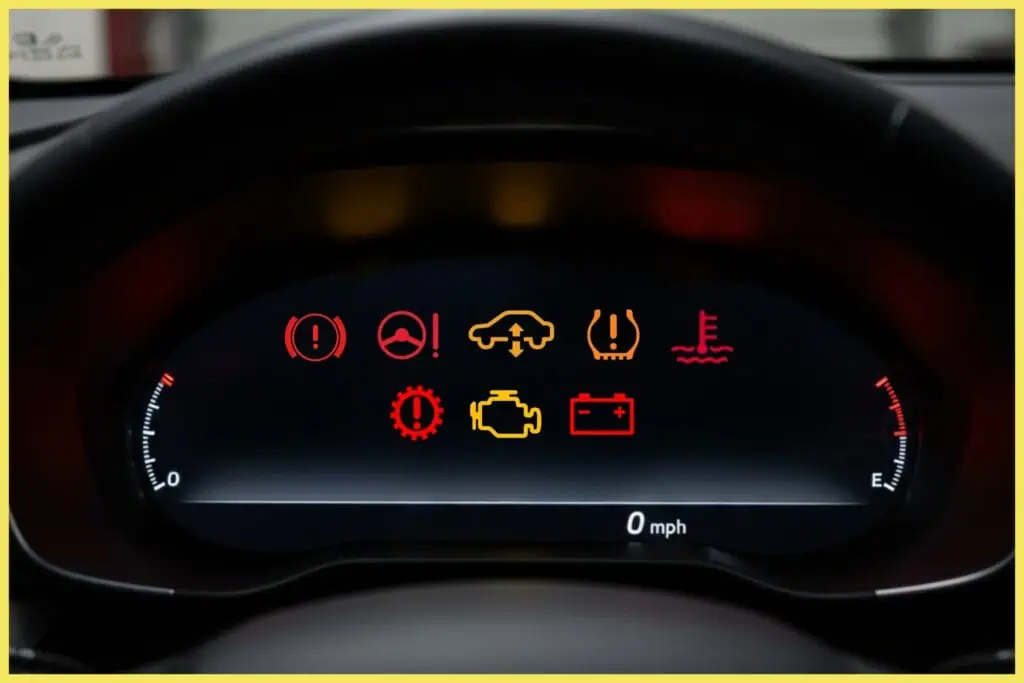
- Brake Warning Signs: Soft pedal, grinding noises, vibration under braking, or a brake light.
- Steering and Suspension Signs: Loose steering, clunking noises, uneven tire wear, or drifting on straight roads.
- Tire and Alignment Signs: Off-center steering wheel, vibration at specific speeds, or rapid edge wear.
- Engine and Transmission Signs: Check engine light, rough idle, hesitation, or delayed shifting.
- AC and Cooling System Signs: Warm air, rising temperature gauges, coolant loss, or weak cabin heat.
- Electrical System Signs: Flickering lights, slow starts, or multiple warning lights appearing together.
Dealer or Auto Repair Shop: Where Should You Take Your Car for Service?
Where you choose to service your vehicle often depends on the type of work it needs. Both dealerships and independent auto repair shops have their strengths, but many drivers are unsure which option is the better fit for routine care or unexpected repairs.
Dealership Service Centers
- Warranty-covered repairs
- Factory recalls and technical service bulletins
- Software updates and module programming
- Brand-specific diagnostic procedures
Independent Auto Shops
- Broader experience across multiple makes and models
- Faster appointment availability and shorter turnaround
- More competitive pricing on labor and parts
- Direct communication with technicians
- Personalized maintenance planning
How to Choose a Reliable Auto Repair Shop in Jacksonville
A trustworthy auto repair shop should make the entire process clear and predictable. Look for a tire place that communicates openly, provides written inspection findings, and employs technicians trained to work on a wide range of vehicles.
Modern diagnostic equipment, transparent pricing, and a strong local reputation are all indicators of consistent service quality.
A dependable shop also guides you through the repair process. They help you understand what requires immediate attention, what is recommended soon, and what can wait, without pressure or confusion.
Big Chief Tire: Your Vehicle Auto Repair Service Partner in Jacksonville, FL
Understanding your vehicle’s core repair and maintenance needs helps you stay ahead of issues and protect your investment. When you need professional support with brakes, alignment, tires, diagnostics, AC service, or general maintenance, Big Chief Tire is here to help.
With multiple service stations across Jacksonville, our technicians use modern equipment and consistent repair standards to keep your vehicle safe, reliable, and ready for daily driving.
Schedule your auto repair near me today by visiting the Big Chief Tire location that is most convenient for you.
Frequently Asked Questions (FAQs)
How often should I service my car?
Most vehicles benefit from a full inspection once a year, plus mileage-based services.
Do warning lights always mean something serious?
Not always, but they should never be ignored. Diagnostics are needed to determine the cause.
Is alignment needed every time I install new tires?
An alignment check protects new tires and ensures correct steering and suspension angles.
How can I reduce unexpected repair costs?
Regular fluid changes, brake checks, tire care, and inspections prevent many major issues.
When should brake fluid be replaced?
Every 2-3 years, regardless of appearance. Brake fluid absorbs moisture, lowering its boiling point and causing brake fade or complete pedal loss during hard stops.
Why does my check engine light come on and off intermittently?
Intermittent lights indicate problems occurring only under specific conditions (temperature, load, speed). The computer stores data showing when faults occurred. Diagnosis retrieves this information and identifies the cause.
