
Introduction
When suspension problems appear, three questions usually come up right away. What is actually wrong? How much will it cost? And why does alignment keep coming up in every conversation?
Professional auto repair shops in Jacksonville address these questions through systematic diagnosis, realistic repair planning, and proper alignment after suspension work. Understanding how this process works helps drivers make informed decisions and avoid unnecessary repairs or repeat expenses.
This guide explains how suspension problems are diagnosed, how alignment fits into the repair process, and what realistic repair costs look like.
How Our Jacksonville Mechanics Diagnose Suspension Problems
Professional suspension diagnosis involves far more than a quick visual check. Technicians use a step by step inspection process to identify worn components and determine which repairs are truly necessary.
The Inspection Process
Diagnosis usually begins with a test drive. Technicians observe how the vehicle responds to bumps, braking, and steering input. They listen for abnormal noises, feel for vibration, and note how stable the vehicle feels at speed.
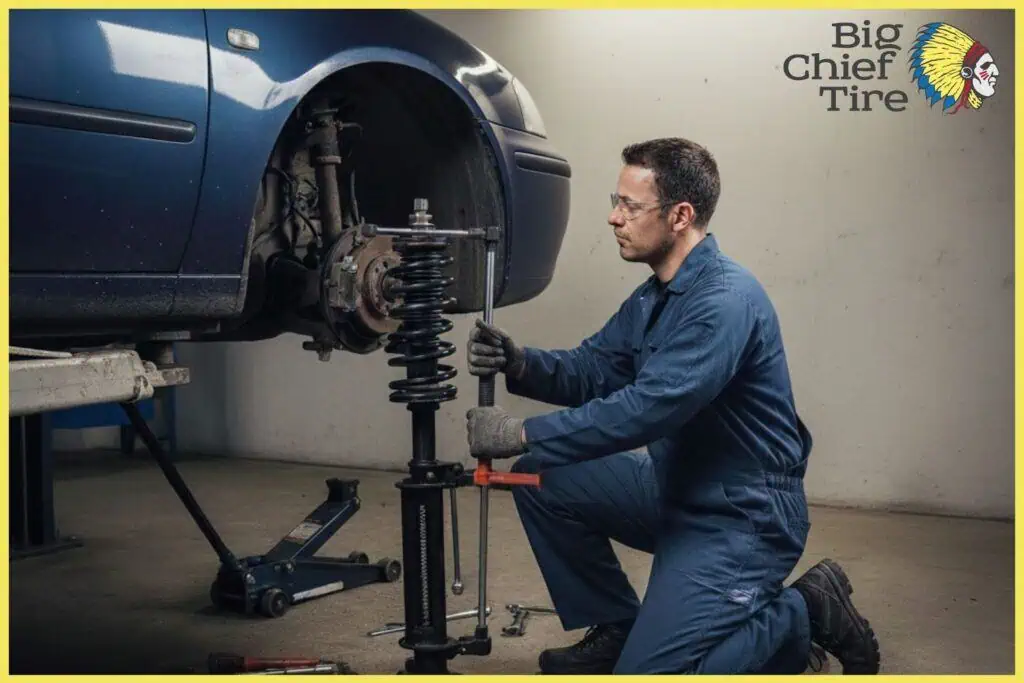
Once in the shop, the vehicle is raised on a lift for hands-on inspection. At this stage, technicians focus on areas that commonly wear under load and movement.
They check wheel movement in directions it should not move, which often points to worn ball joints, tie rods, or bearings. Protective boots on suspension joints are inspected for tears that allow dirt and moisture inside. Bushings are examined for cracking, compression, or separation from their mounts.
Shocks and struts are inspected for fluid leaks, corrosion, or physical damage. Springs are checked for cracks or sagging that affect ride height. Mounting hardware is reviewed for looseness or signs of abnormal contact during suspension travel.
Specialized Diagnostic Equipment
Modern alignment systems provide precise measurements of suspension angles. These readings show which components are no longer holding factory specifications and help determine whether alignment alone is possible or if worn parts must be replaced first.
Some shops also evaluate shock performance through controlled bounce testing, but visual and mechanical inspection remains the most reliable method for identifying failure.
Why DIY Diagnosis Has Limits
Basic checks like the bounce test or visual inspection can reveal obvious problems, but many suspension issues are subtle. Ball joints, bushings, and alignment shifts often show no visible symptoms until they are close to failure.
Professional inspection also helps prioritize safety. When multiple components show wear, technicians can explain which repairs are urgent and which can be planned later, reducing risk and unnecessary expense.
How Suspension Repair and Alignment Work Together
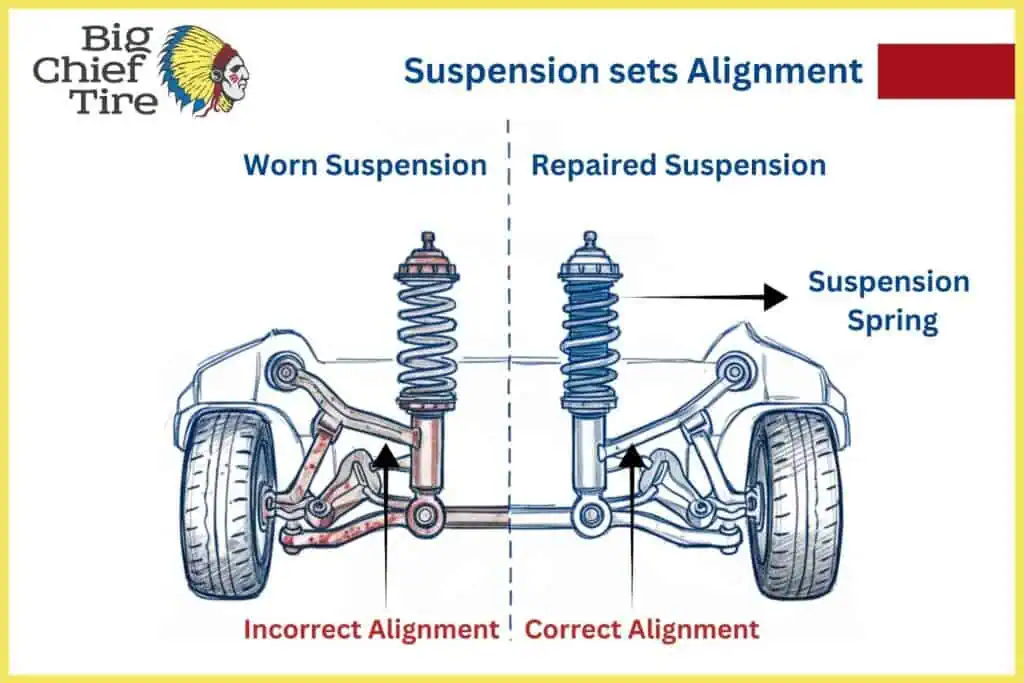
Suspension and wheel alignment are directly connected. Alignment adjustments rely on suspension components being stable and intact.
Why Alignment Depends on Suspension Condition
Wheel alignment adjusts three angles: camber, caster, and toe. These angles are controlled by suspension parts such as control arms, ball joints, springs, and struts.
When suspension components wear, they can no longer hold these angles consistently. Worn bushings allow wheels to shift under load. Collapsed springs change ride height and camber. Failed joints introduce movement that alignment machines cannot correct.
Performing alignment without fixing worn suspension is similar to straightening a picture on a tilted wall. It may look correct briefly, but it does not stay that way. Many drivers experience repeated pulling after recent alignment. The issue is not the alignment service itself but suspension components that cannot maintain proper geometry.
Professional suspension inspection before alignment prevents this cycle by identifying worn parts first.
After Suspension Repairs
Any suspension repair that affects wheel position requires alignment afterward. Replacing struts, control arms, ball joints, or springs alters suspension geometry. Even parts installed to exact specifications require alignment adjustment.
Skipping alignment after suspension repairs leads to uneven tire wear and wasted investment. For this reason, alignment is typically included or strongly recommended after suspension work.
How Much Does Suspension Repair Cost?
Suspension repair costs vary because no two failures are the same. Final pricing depends on which components are worn, how long the issue has existed, and the vehicle design.
Typical repair ranges include:
- Shock or strut replacement: $400 to $900 per pair
- Ball joint replacement: $200 to $700 per joint
- Control arm repair: $200 to $800 per arm
- Bushings: $150 to $400 per set
- Coil spring replacement: $200 to $500 per pair
When multiple components are worn or damage has spread, a full suspension overhaul can range from $1,500 to $5,000 or more.
Several factors influence cost. Luxury and performance vehicles use more complex components. Some repairs require extensive labor because parts are deeply integrated into the suspension system. OEM parts cost more but often provide better ride quality and durability.
Technicians usually recommend replacing suspension components in pairs, such as both front or both rear shocks. Replacing one side alone can cause handling imbalance and accelerated wear. Since labor overlaps, paired replacement is often more cost effective long term.
After most suspension repairs, wheel alignment is required. This typically adds $100 alignment but protects tires and restores proper handling.
Addressing suspension issues early like a worn shock may cost a few hundred dollars. Ignoring it can allow damage to spread to control arms, ball joints, and tires, turning a manageable repair into a major expense.
Making Smart Suspension Repair Decisions With Big Chief Tire in Jacksonville FL
Suspension problems are rarely isolated issues. That is why professional diagnosis is the most important first step.
At Big Chief Tire, certified technicians provide comprehensive suspension evaluations using advanced inspection and alignment equipment. We explain which components are worn, why repairs are needed, and how they affect safety and handling.
With more than 60 years serving Jacksonville drivers, Big Chief Tire is known for honest recommendations and transparent pricing. Repairs are prioritized based on safety and vehicle condition, not sales pressure.
Whether you are dealing with pulling, bouncing, clunking noises, or uneven tire wear, our team identifies the root cause and provides clear repair guidance. After suspension repairs, proper alignment is performed to protect tires and restore driving confidence.
Visit any of our six Jacksonville tire shop locations to schedule a professional suspension inspection and get clear answers before making repair decisions.
Frequently Asked Questions
Can I get an alignment without fixing my suspension?
Technically yes, but it’s a waste of money. If your auto repair technician finds worn ball joints or bushings, the car will fall out of alignment as soon as you hit a Jacksonville pothole. We recommend fixing the parts first to protect your tire investment.
How long does a suspension repair take at your Jacksonville shop?
Most common repairs, like replacing shocks or struts, can be completed in 3 to 5 hours. More complex “overhauls” may take a full day. We always provide a time estimate alongside our repair quote.
Why should I replace shocks in pairs?
Replacing only one shock creates an imbalance. The new shock will have more “firmness” than the old one, leading to uneven handling and accelerated wear on the older part. In the auto repair world, “replacing in pairs” is the gold standard for safety.
Is suspension repair covered by insurance?
Generally, insurance only covers suspension damage if it was caused by a specific accident or collision. Regular “wear and tear” from daily driving is considered standard vehicle maintenance.
Will a bad suspension affect my gas mileage?
Indirectly, yes. If your suspension causes poor wheel alignment, your tires “drag” against the road instead of rolling smoothly. This increased rolling resistance can lower your MPG and cost you more at the pump.

