

Introduction:
Brakes usually give small hints before they become a serious problem. You may feel a slight vibration, hear a new sound, or notice that the pedal does not respond the way it used to. These early changes are often the first signs that the braking system needs attention.
Modern vehicles rely on a mix of mechanical components and electronic controls, so brake repair today is far more detailed than swapping pads.
This guide explains what drivers should expect from a full brake repair service, what each step includes, and how technicians assess pads, rotors, calipers, sensors, and fluid so you know exactly what is being checked during a visit.
What a Technician Evaluates During a Full Brake Service
A full brake service works best when each part of the system is reviewed in context, not in isolation. Rather than looking at pads or rotors individually, the goal is to understand how the entire system responds when you press the pedal.
Here is how technicians break down the process and what each step tells them.
Brake Pads and Their Wear Pattern
Pads are often the first clue to the health of the braking system. Most brake pads last 30,000 to 70,000 miles, but that range shifts depending on driving habits, vehicle weight, and how often the brakes are used in stop-and-go traffic.
Their surface shape also reveals how evenly pressure has been applied over time. When wear is uniform, it usually means the caliper and hardware have been doing their job. Glazing, tapering, or inconsistent surfaces often point to heat buildup, sticking slides, or pressure imbalance.
Instead of checking pad thickness alone, a technician studies these patterns to spot issues that may develop if they are not corrected in time.
Rotor Condition and Surface Behavior
Rotors are evaluated for more than just thickness. Their condition shows how much heat the braking system has been absorbing and how evenly the friction has been transferred. A rotor with small heat spots or surface variations may cause pedal vibration even if its thickness is still within limits.
Runout measurements help identify subtle side-to-side movement as the rotor spins. This determines whether resurfacing will restore smooth braking or if replacement is the safer option. The goal is always consistent, even contact between the pad and the rotor.
Calipers and Movement of Brake Components
Calipers apply the force that pushes pads against the rotors. When they move freely, the system stays balanced. When they stick or retract unevenly, one wheel can overheat, wear faster, or produce pulling during braking.
Instead of checking the caliper as a single unit, technicians evaluate how its slides, pins, seals, and pistons behave under pressure. Even a small restriction can alter braking response, so this step is essential for restoring a smooth, predictable pedal feel.
Brake Fluid Condition and Hydraulic Pressure
Brake fluid plays a direct role in how firm or soft the pedal feels. As the fluid absorbs moisture, its ability to tolerate high temperatures decreases. This is why the pedal sometimes sinks or feels inconsistent after repeated braking.
A fluid test identifies water content and contamination. The results help determine if a flush is needed or if the existing fluid is still stable. This check impacts safety more than most drivers realize, because hydraulic pressure is what delivers stopping power to the wheels.
ABS Sensors and Electronic Controls
Modern braking systems rely heavily on electronic accuracy. Wheel-speed sensors, ABS modules, and traction control components must all communicate correctly for the vehicle to maintain stability during sudden stops.
During service, the electronic data is reviewed for unusual readings or signal dropouts. Even a small mismatch between sensors can produce warning lights or an inconsistent ABS response. Addressing these issues early prevents unexpected behavior during emergencies.
Brake Lines, Hoses, and Hydraulic Flow
Rubber hoses age from the inside long before any cracks appear outside. When the inner lining weakens or collapses, hydraulic pressure becomes restricted. This can cause one brake to drag, overheat, or respond slower than the others.
Technicians check hose flexibility, connection points, and flow behavior. This step confirms that the braking force you generate at the pedal reaches each wheel without loss or delay.
What Drivers Should Expect During a Complete Brake Service
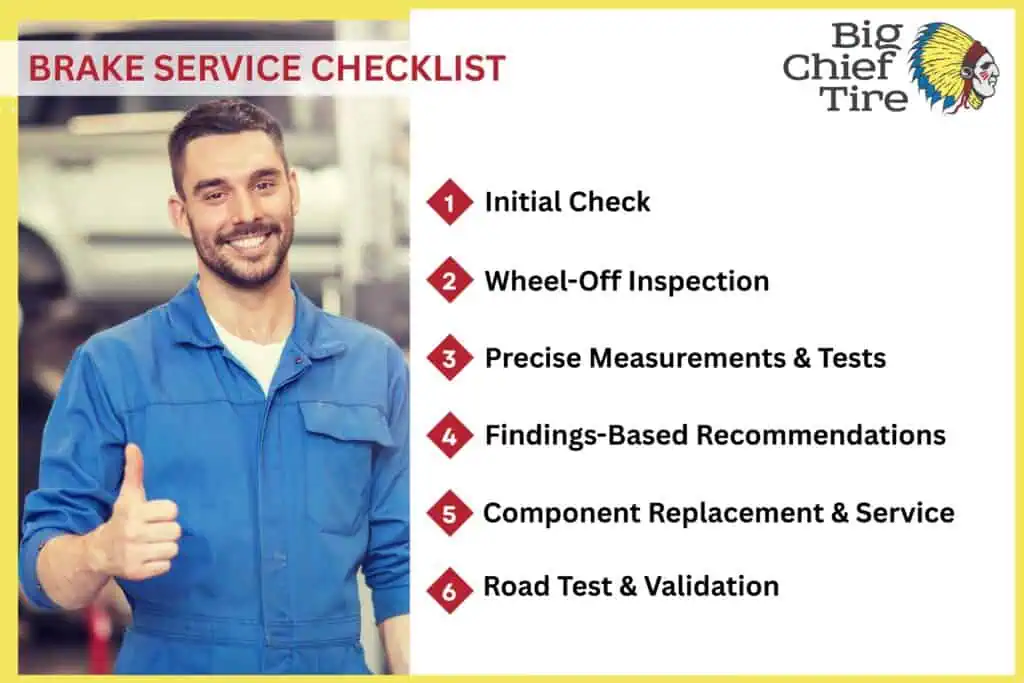
A proper brake service should feel structured and transparent. When performed correctly, you are not just told what needs to be replaced, you are shown why.
Below is a clear breakdown of what drivers can expect from start to finish when they bring their vehicle in for a full brake inspection and repair.
A Clear Initial Assessment
A visit to the tire shop usually starts with a brief conversation about what you have been experiencing:
- When did the noise or vibration start?
- Does the pedal feel different at certain speeds?
- Do warning lights appear on the dash?
These details help technicians narrow down the likely cause before the physical inspection begins.
Removing the Wheels for a Full Visual Inspection
A proper brake assessment cannot be done with the wheels on. Once removed, the technician examines:
- Pad thickness and wear pattern
- Rotor surface and runout
- Caliper movement
- Hardware condition
- Brake lines and hoses
- Fluid level and condition
This step establishes the overall health of the braking system.
Exact Measurements and Testing
Brake components are evaluated using tools that measure:
- Rotor thickness (must meet manufacturer’s minimums)
- Rotor runout (checks for wobble)
- Brake fluid moisture content
- Pad wear across the entire friction surface
- Caliper piston function under pressure
These measurements determine whether a part can be reused or must be replaced.
Recommendations Based on Actual Findings
At this stage, a technician explains three things clearly:
- Items that must be repaired for safety
- Items recommended for performance or longevity
- Items that can wait but should be monitored
The goal is simple: no confusion, no guesswork, no unnecessary replacements.
Replacement and Servicing of Components
Depending on the findings, a full brake service may include:
- Installing new brake pads
- Replacing or resurfacing rotors
- Lubricating and resetting caliper slides
- Updating hardware clips and pins
- Flushing and replacing brake fluid
- Resetting electronic systems if needed
- Road testing the vehicle
Even new pads will not perform correctly if installed without fresh hardware and lubrication.
Final Road Test and Validation
After repairs, the technician performs a controlled road test to evaluate:
- Pedal travel and firmness
- ABS operation
- Noise levels
- Straight-line braking
- Vibration or pulsing
- Rotor bedding-in response
Drivers should receive a clear summary of what was fixed, what was measured, and what to expect over the next few days. For example, new pads undergo a bedding-in process, so a slight change in pedal feel during the first 50–100 miles is normal.
Warning Signs You Should Not Ignore
Brake systems often give subtle clues before major problems appear. Pay attention to:
- A soft or sinking brake pedal
- Grinding, squealing, or scraping noises
- Vibration or pulsation when slowing down
- Steering pull during braking
- A burning smell after driving
- Brake or ABS lights that turn on intermittently
These symptoms suggest that one or more components are drifting out of their ideal operating range.
Brake Service Myths Drivers Should Stop Believing
Myth 1: “Rotors warp easily.”
In most cases, vibration comes from uneven pad deposits, not warped metal.
Myth 2: “Brake fluid lasts the life of the car.”
Moisture absorption reduces the boiling point and affects pedal feel. It must be replaced every 2–3 years.
Myth 3: “If there is no noise, everything is fine.”
Many dangerous brake issues, including hydraulic problems, produce no sound at all.
Myth 4: “Pads alone solve the problem.”
A full brake service evaluates rotors, calipers, fluid, and lines. Pads are only one part.
Myth 5: “Brakes should be replaced only when worn out.”
Early signs such as uneven wear, glazing, or pulsation, often require service long before pads reach minimum thickness.
How Often Brakes Should Be Serviced
There is no one answer, because brake wear depends on:
- Driving habits
- Traffic conditions
- Vehicle weight
- Quality of parts
- Environmental factors
However, most drivers benefit from:
- Brake Inspection: Every oil change or at least twice a year
- Pad Replacement: Typically replaced between 25,000 and 60,000 miles
- Rotor Service: Replace or resurface when reaching minimum thickness
- Brake fluid Replacement: Every 2–3 years
Routine auto repair helps maintain consistent stopping power and extends the life of the entire braking system.
Big Chief Tire: The Best Place for Brake Repair in Jacksonville

When your brakes begin to show early signs of trouble, a proper inspection is always the safest next step. Big Chief Tire in Jacksonville, FL provides complete auto repair services, including precise and reliable brake repair.
Our technicians carry out detailed evaluations, accurate measurements, and system-focused adjustments so your vehicle stops the way it should every time.
Schedule your brake service by visiting the Big Chief Tire location nearest to you and keep your vehicle ready for everyday driving with dependable care.

