
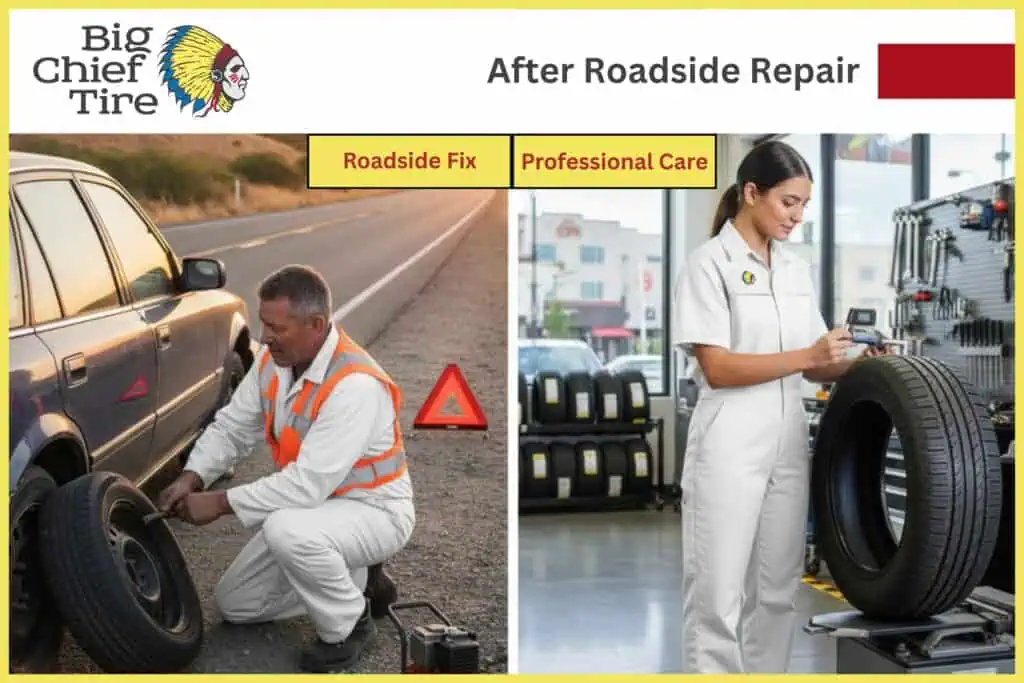
Introduction
A flat tire, warning light, or sudden change in how your car feels can turn an ordinary drive through Orange Park into an unexpected stop. It might happen while leaving home or while navigating the busy Blanding Boulevard area.
When the vehicle stops working or the tire loses pressure, the first step is often to get immediate roadside help so the car can be moved safely. Once that is sorted, the next question is just as important: should you visit a tire shop for a proper inspection?
This guide explains when roadside assistance is the right choice, when a repair shop visit becomes essential, and how to stay safe during a roadside breakdown.
When a Roadside Fix Makes Practical Sense
Roadside assistance is available when movement is unsafe, visibility is poor, or driving farther could cause more damage. It is not meant to complete permanent repairs, but it helps you reach a safe location or a repair shop without putting yourself or your vehicle at risk.
You may need roadside help when:
- The tire is completely flat, and driving could damage the rim
- You do not have a functional spare tire available
- Traffic, weather, or road conditions make it unsafe to step out and inspect the tire
- The vehicle stopped in a place where you do not feel safe
- You only need enough mobility to reach a repair shop nearby
In these situations, the goal is simple: Get the vehicle out of harm, then have it properly inspected.
What Roadside Assistance Can Do
Roadside technicians provide short-term support that gets you moving or keeps you safe until you can reach a repair shop. Their tools and procedures are designed for quick, temporary solutions.
A roadside team can:
- Install your spare tire
- Add air to a tire that has lost pressure
- Apply a temporary plug to slow a small puncture
- Use an inflator or sealant kit to provide short-distance mobility
- Jump-start a dead battery
- Tow the vehicle if it cannot be driven
When You Should Go Straight to an Auto Repair Shop After Roadside Assistance
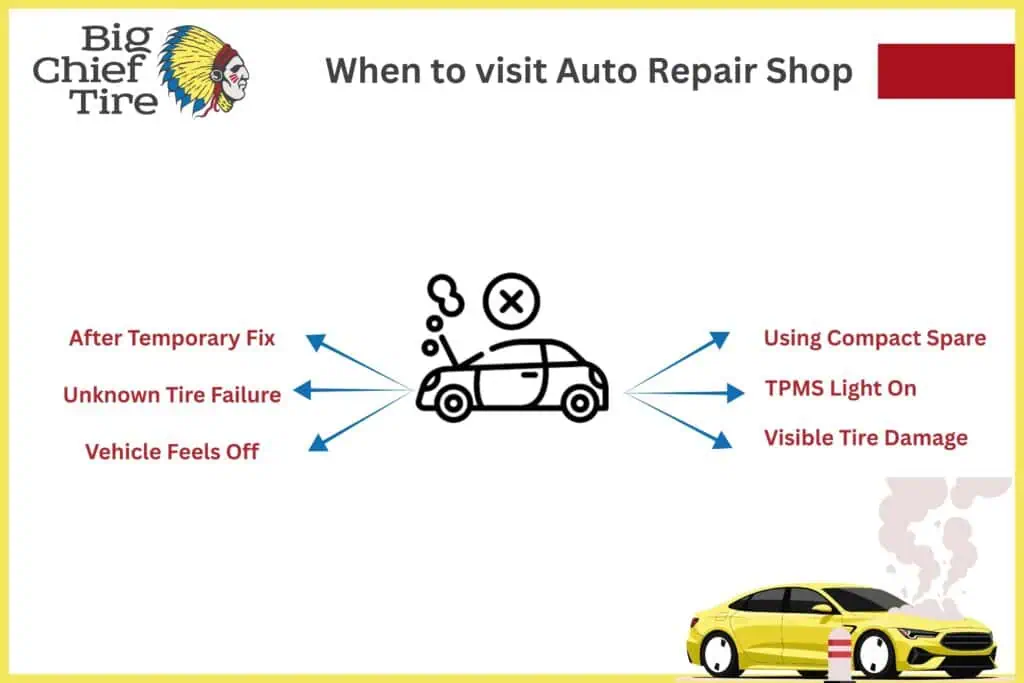
Even after receiving a spare tire, an air refill, or a temporary plug on the roadside, there are situations where visiting an auto shop should be your immediate next step.
1. When the Tire Was Only Temporarily Fixed
If the roadside technician used a plug or inflator to get the tire holding air again, treat it as a short-term solution. These repairs seal the tire’s surface but do not address damage under the tread or inside the inner liner.
Technicians with an auto repair shop will remove the tire from the wheel to determine whether it can be safely repaired or if replacement is needed.
2. When You Are Not Sure Why the Tire Failed
A roadside repair focuses on the surface problem, not what caused it. A nail may be obvious, but slow leaks, bead leaks, or valve stem problems are harder to detect on the roadside.
A professional inspection, on the other hand, will take a closer look to confirm whether the damage is minor or if the temporary roadside fix was hiding a deeper problem that needs proper attention.
3. When the Vehicle Still Feels Different After the Temporary Fix
If you feel vibration, pulling, or a change in how the steering responds after receiving roadside help, the issue may extend beyond the tire. Impacts can damage the wheel, suspension components, or alignment.
Only a repair shop has the equipment to evaluate those systems accurately.
4. When You Used a Compact Spare Tire
Donut spares are built only for short distances and lower speeds. They change how the vehicle handles and should never be used for regular driving. An auto shop needs to inspect the damaged tire to see if it can be repaired properly or if a full replacement is required.
5. When the TPMS Light Remains On
Roadside services can air up a tire, but they cannot always reset or diagnose tire pressure monitoring sensors. If the light stays on or comes back shortly after driving, a shop visit is necessary to recalibrate the system and check all tire pressures for consistency.
6. When the Tire Has Visible Damage Beyond a Simple Puncture
Bulges, deep cuts, sidewall marks, and uneven wear patterns require a closer look. Roadside help cannot assess whether a tire’s internal structure is still safe, but a shop can identify internal cracks, belt separation, or structural weakening that may not show up from the outside.
Practical Tips for Orange Park Drivers When a Car Breaks Down
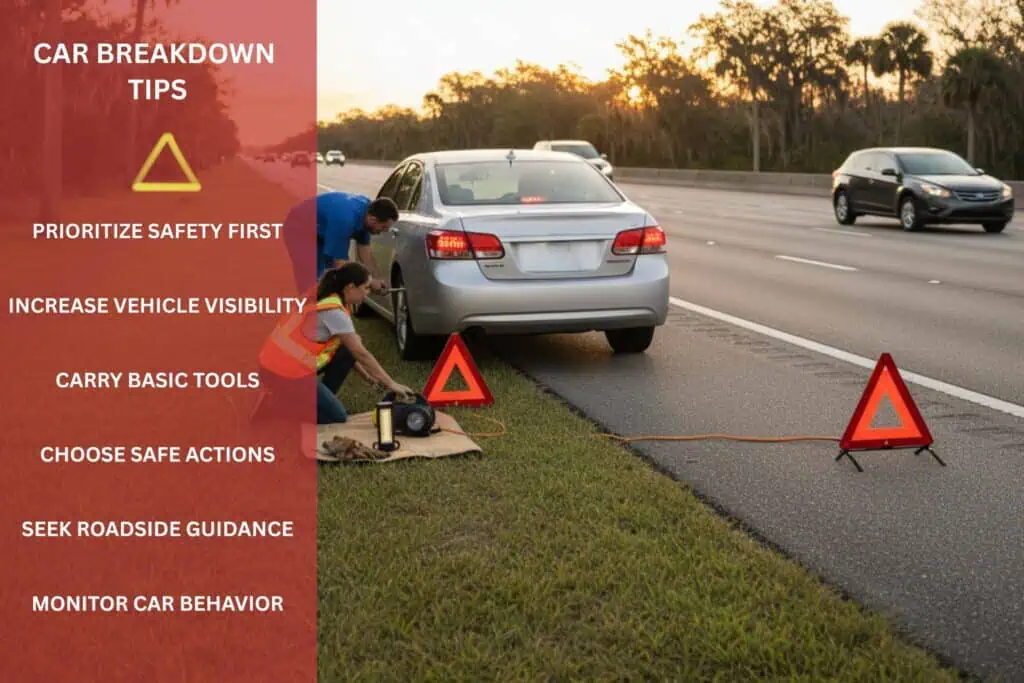
Tire problems and sudden car issues are stressful, especially when they happen in traffic. The first goal is always to protect yourself and anyone traveling with you, then approach the situation calmly so the vehicle can be checked safely by a professional.
1. Focus on Safety Before Checking the Tire
If the car feels unstable, slow down gently and move to the safest location you can find. Turn on your hazard lights. If the surroundings feel unsafe, remain inside the vehicle with your seatbelt on until help arrives.
2. Make the Vehicle Visible to Others
If it is safe to exit, place reflective triangles behind the car to warn other drivers. Use hazard lights at all times. At night or in poor visibility, turn on the interior dome light so other drivers can see you.
3. Carry Simple Tools That Help You Understand the Situation
A tire pressure gauge, portable inflator, flashlight, gloves, and reflective markers allow you to assess the tire without performing a full repair. These tools give you clarity and make you more visible while waiting for help.
4. Only Do What You Feel Comfortable and Safe Doing
If you are unfamiliar with changing a tire or working with tools on the roadside, do not attempt it. There is no pressure to fix anything yourself, especially near traffic. Waiting for roadside assistance is often the safest choice.
5. Ask Roadside Assistance for Clear Guidance
Describe what you felt or saw before the breakdown. Roadside technicians can guide you on whether you can continue driving slowly or if you should go directly to a repair shop for a full inspection.
6. Pay Attention to the Vehicle After You Get Moving Again
If you feel vibration, pulling, new noises, or if the tire light returns, reduce your speed and plan for a repair shop visit as soon as possible. Temporary fixes help you move, but only a shop inspection confirms long-term safety.
Big Chief Tire: Your Trusted Tire Shop in Orange Park for Post Breakdown Inspections
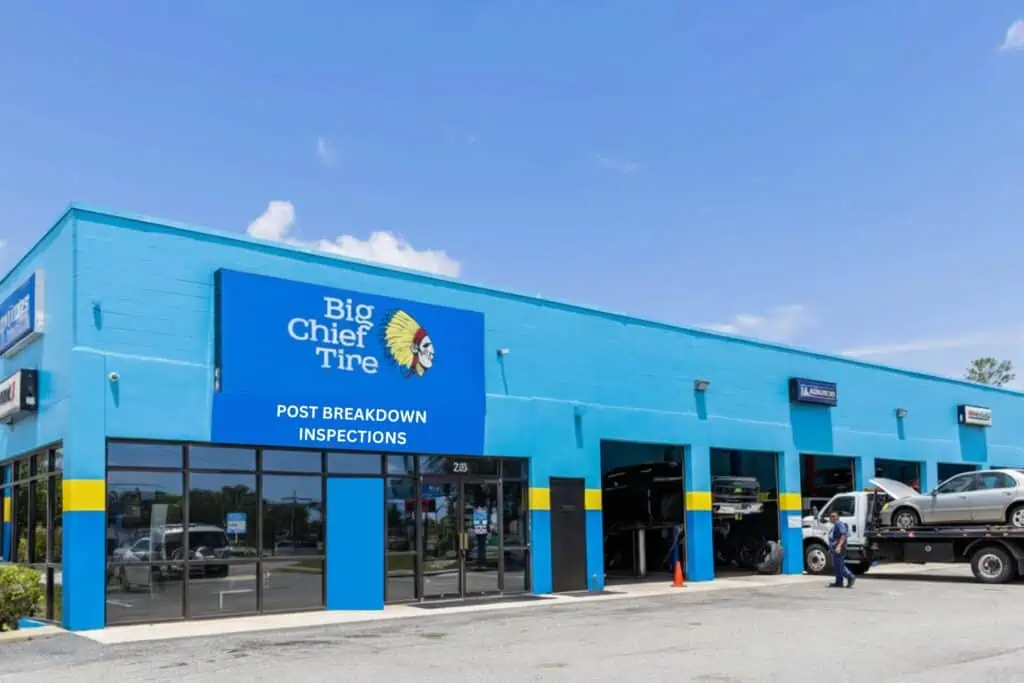
Getting the car running again after a roadside issue feels like a relief, but it is still helpful to make sure everything is working as it should. A follow-up inspection gives you peace of mind for the drives ahead.
At Big Chief Tire on 238 Blanding Boulevard, our technicians take the time to check the vehicle thoroughly after a breakdown. They review the tires, wheels, battery condition, fluids, and other key components that may have been affected when the car stopped unexpectedly. Their careful approach ensures that nothing important is missed and that your vehicle is ready for regular driving again.
For a reliable post breakdown inspection and clear guidance, visit our auto repair Orange Park FL shop. We make sure local drivers return to the road with confidence.
