
Introduction:
Every tire’s performance begins with one factor: the air pressure inside it.
It determines how your car grips the road, how efficiently it uses fuel, and how evenly your tires wear over time.
But how much pressure is too much, and how low is too low? What really happens when you drive on overinflated or underinflated tires, especially in Florida’s heat and humidity?
In this complete guide from Big Chief Tire, your trusted tire repair shop in Jacksonville, we explain everything you need to know about tire pressure, from reading PSI markings correctly to understanding seasonal changes and small maintenance habits that prevent costly repair bills later.
So let’s dive deep!
Understanding Tire Pressure
Tire pressure is the force of air inside each tire that supports your vehicle’s weight, cushions road impacts, and maintains consistent traction with the pavement.
Every vehicle has an optimal pressure range measured in pounds per square inch (PSI). For most passenger cars, this range falls between 30 and 35 PSI. You can find your vehicle’s exact recommendation on the sticker inside the driver-side door or in the owner’s manual.
The PSI number printed on the tire’s sidewall is often mistaken for the correct setting, but it actually represents the maximum pressure the tire can safely handle, not the level it should be inflated to.
Tire pressure isn’t a fixed value. It changes with temperature, speed, and load. Even a small deviation can affect performance. For instance, if the recommended level is 35 PSI, going above 40 PSI can begin to create handling, comfort, and wear issues.
According to data from the U.S. Department of Energy, every 1 PSI drop below the recommended level can reduce fuel efficiency by roughly 0.2 percent. It may seem minor, but across thousands of miles, that difference adds up, costing more in fuel and accelerating tire wear.
Maintaining proper tire pressure isn’t just about saving money. It ensures that your braking, handling, and suspension systems perform exactly as designed, keeping you safer on every Jacksonville road.
As part of your routine tire maintenance, it’s important to regularly inspect tread depth, rotation patterns, and alignment to extend tire life and improve performance.
How Wrong Tire Pressure Affects Your Drive
As discussed earlier, even a slight mismatch in tire pressure changes how your vehicle behaves on the road.
Underinflated Tires
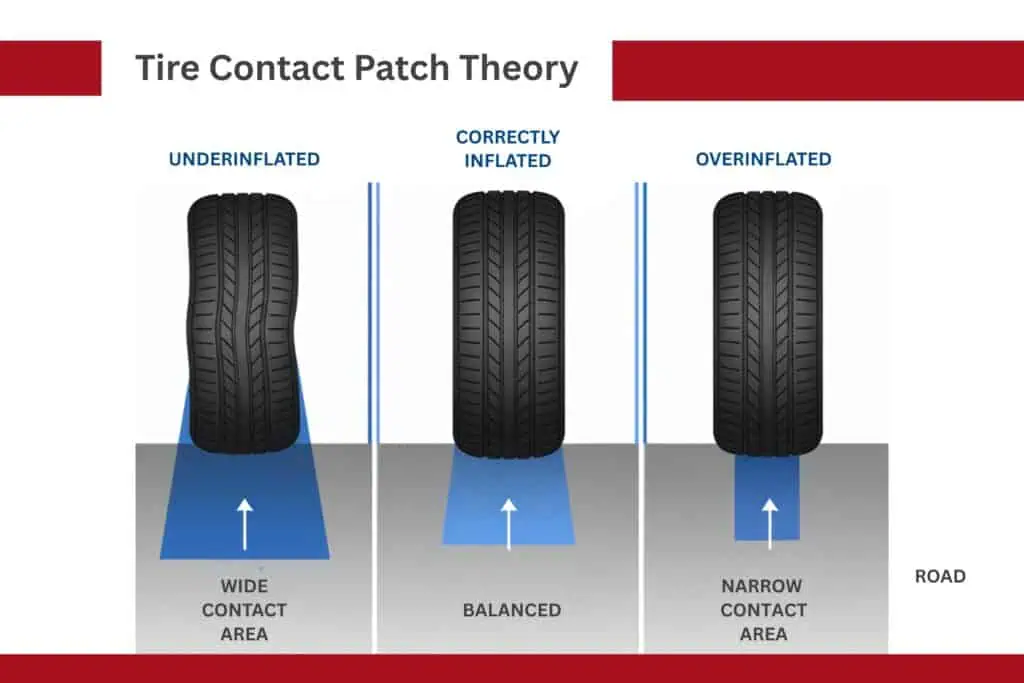
When tires are underinflated, there is not enough air to maintain their intended shape. This causes the sidewalls to flex excessively and the shoulders of the tread to bear most of the load. That added friction generates heat, wears the outer edges faster, and increases rolling resistance.
Watch for:
- Sluggish steering response or a “heavier” feel when turning
- Noticeable vibration or droning road noise
- Outer tread blocks showing accelerated wear
- Decreased fuel economy due to higher rolling resistance
- Tires appearing visibly soft or flattened near the ground
Prolonged driving on underinflated tires is dangerous, especially in hot Florida conditions. Heat buildup can weaken the internal structure of the tire, leading to premature failure or even a blowout at highway speeds.
Overinflated Tires
Overinflated tires contain more air than recommended, causing the tread to bulge outward and reducing the tire’s contact patch with the road. As a result, the vehicle loses traction and the ride becomes noticeably harsher.
Watch for:
- A stiff, bouncy ride over bumps or uneven pavement
- Reduced braking efficiency and traction, especially on wet roads
- Steering that feels overly sensitive or “twitchy”
- Center tread wearing faster than the shoulders
Although overinflated tires may show slightly better fuel economy in the short term, the trade-off is reduced grip, poor comfort, and a higher risk of impact damage from potholes or curbs.
What Causes Tire Pressure to Change
Even if your tires are new and sealed tight, air pressure is never completely stable. It shifts naturally with weather, driving habits, and small mechanical factors that most drivers do not even notice. Knowing what affects tire pressure helps you stay ahead of hidden issues that can shorten tire life or affect safety.
1. Florida’s heat and humidity
Tire pressure changes with temperature, and in Florida’s humid climate, those swings can be dramatic. Cool mornings may show normal readings, but a few hours of highway driving under the sun can raise the pressure noticeably.
Over time, this cycle of heating and cooling stresses the tire’s internal structure, leading to uneven wear. That’s why technicians always recommend checking tire pressure when the tires are “cold”, before your first drive of the day.
2. Gradual air loss
Tires naturally lose a small amount of air over time, even without visible damage. The rubber itself allows slow air movement through microscopic pores, causing about one pound of pressure loss per month. It may not sound like much, but over several weeks, it can make a big difference in performance and fuel efficiency.
3. Small punctures or valve stem leaks
Not all leaks are obvious. A nail, a worn valve stem, or corrosion around the wheel rim can release air so slowly that you will not notice it right away. This slow drop in pressure increases rolling resistance, which makes your engine work harder and can wear out the edges of your tread faster.
A professional inspection during routine service is the best way to catch these small leaks before they cause bigger problems.
4. Extra weight and long trips
Carrying heavy cargo or towing a trailer puts more load on your tires, which slightly raises pressure as heat builds inside. On long highway drives, the air inside expands further, making it easy to overinflate beyond safe levels.
Once the tires cool, the pressure drops again. This up-and-down fluctuation is why maintaining your tires within the recommended range matters more than chasing a single “perfect” number.
5. Seasonal Changes
Even though Florida doesn’t experience harsh winters, cooler months still affect tire pressure. As the air inside contracts, PSI drops and tires can start to feel underinflated. This not only affects steering and fuel economy but can also trigger your Tire Pressure Monitoring System (TPMS) light.
How Often Should You Get Your Tire Pressure Checked
It is best to check your tire pressure at least once a month and before long trips, as changes in temperature, load, and driving conditions can alter PSI levels faster than most drivers realize.
If you notice edge or center tread wear, uneven patterns, or the need for frequent refills, it is time for a professional inspection. These signs often point to hidden issues such as a slow leak, valve stem damage, or a bead or rim seal that is no longer airtight.
Professional tire shop experts use calibrated gauges for precise PSI readings and inspect far more than just air pressure. A full tire service includes checking valve stems, bead seating, and tread condition to ensure your tires maintain even contact with the road.
During a visit, tire mechanics also review balancing, rotation, and alignment, each of which plays a key role in maintaining correct tire pressure and overall vehicle stability.
Keep Your Tire Pressure Correct With Expert Tire Repair Shop Near Me

Tire pressure may seem like a small detail, but it plays a major role in how safely your car performs every day.
According to the National Highway Traffic Safety Administration (NHTSA), nearly 11,000 tire-related crashes occur each year in the United States, many linked to improper tire pressure. If you are unsure about your current PSI or notice uneven wear, have your tires inspected by professionals.
At Big Chief Tire, your trusted tire shop near me in Jacksonville, our skilled mechanics use precise gauges and advanced diagnostic tools to ensure your tires are inflated correctly, balanced, aligned, and performing at their best.
Visit your nearest Big Chief Tire location in Westside, Southside, Northside, Mandarin, Blanding, or Orange Park, and drive confidently knowing your tires are safe with us.
Frequently Asked Questions
Do all tires on a car need the same PSI?
Not always. Most passenger vehicles recommend the same PSI for all four tires, but some performance models or vehicles with staggered tire setups (different front and rear tire sizes) require different pressures. Always follow the values listed on the sticker inside the driver-side door jamb, not the sidewall markings on the tires.
How often should I check my tire pressure?
Experts recommend checking tire pressure at least once a month and before long road trips. In Jacksonville’s warm, humid climate, pressure can fluctuate faster than drivers realize. Checking when the tires are “cold”(before your first drive of the day) gives the most accurate reading.
What should I do if my TPMS light turns on?
If your Tire Pressure Monitoring System (TPMS) light appears, it means one or more tires are at least 25% below the manufacturer’s recommended level. Pull over safely and check your tire pressure with a reliable gauge. Reinflate any low tires to the proper PSI. If the light stays on, visit a tire repair shop, there could be a slow leak, valve stem issue, or faulty sensor.
Can I drive with slightly low tire pressure?
You can, but it is risky. Even a few PSI below the recommended level increases rolling resistance and heat buildup, which can damage the tire’s internal structure. Prolonged driving on underinflated tires can lead to blowouts, especially in Florida’s heat.
How does tire pressure change with temperature?
Tire pressure naturally drops about 1 PSI for every 10°F decrease in temperature. That’s why your tires may appear low on cool mornings but return to normal later in the day. Conversely, in hot weather or during long drives, pressure rises as air expands, another reason why checking when tires are cold is crucial.
What happens if my tires are overinflated?
Overinflated tires reduce the size of the tread area that touches the road, leading to a harsher ride, less traction, and uneven center wear. While it might slightly improve fuel economy, it increases the risk of damage from potholes and curbs.
Is the maximum PSI printed on my tire safe to use?
No. That number indicates the maximum pressure the tire can safely withstand, not the optimal level for daily driving. Always follow your vehicle manufacturer’s recommended PSI, which ensures balanced handling, even tread wear, and proper braking performance.

