
When most drivers think about vehicle maintenance, oil changes or brake repairs usually come to mind first. Yet the condition of your tires has just as much influence on safety, handling, and fuel efficiency. Tires carry the entire weight of your car, absorb road impacts, and determine how effectively your brakes and suspension can do their job.
The reality is that tire care is often overlooked until problems appear. Uneven tread may hint at alignment issues, low air pressure can reduce fuel economy, and neglected wear patterns can shorten the life of brakes and suspension. Recognizing these signs early prevents costly repairs and keeps every drive more secure.
This complete guide to tire care and maintenance is written as a professional resource for drivers who want to understand and manage their tires with confidence. Backed by the expertise you would expect from a trusted tire shop in Jacksonville, it explains how to read tire markings, check pressure, spot wear, prepare for Florida’s climate, and apply habits that extend tire life and improve overall vehicle performance.
Understanding Tire Basics
Before you can care for your tires, it helps to understand what those side marking and features really mean. Each detail on a tire is there for a reason, and knowing how to read them gives you a clearer picture of performance, safety, and lifespan.
Reading tire size and sidewall markings
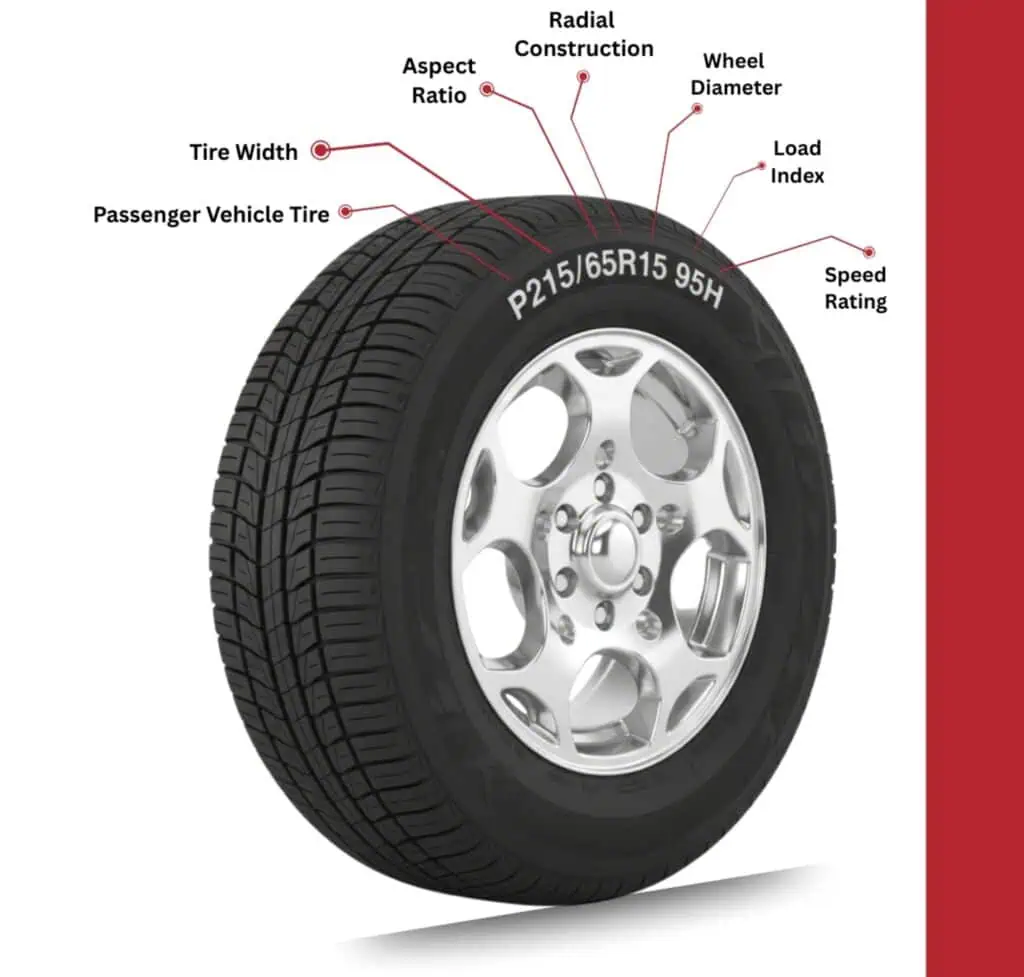
Every tire has a sequence of numbers and letters molded into the sidewall. For example, P215/65R15 95H tells you:
- P: Passenger vehicle tire (you may also see LT for light truck).
- 215: Tire width in millimeters.
- 65: Aspect ratio, the sidewall height expressed as a percentage of width.
- R: Radial construction, the most common type today.
- 15: Wheel diameter in inches.
- 95: Load index, showing how much weight the tire can carry.
- H: Speed rating, indicating maximum safe speed capability.
These details ensure you match the right tire to your car’s specifications. Using the wrong size or rating can affect handling, braking, and even fuel economy.
Types of tires
Different tires are engineered for different driving needs:
- All-season tires – The most common choice, designed for balanced performance in dry, wet, and mild winter conditions.
- Performance tires – Offer enhanced grip and sharper handling, often with higher speed ratings.
- Touring tires – Built for comfort and longevity, ideal for drivers with long highway commutes.
- Winter tires – Designed with softer rubber compounds and deeper tread for snow and ice. Less relevant in Florida, but important for those who travel north.
- Light truck and SUV tires – Made for heavier loads and tougher road conditions.
Choosing the right tire
The right tire depends on more than vehicle make and model. Driving style, climate, and road conditions play a role too. A daily commuter may want long-lasting tread life, while a driver who spends weekends on highways may prefer touring tires for comfort.
In regions like Florida, wet-weather traction is a priority, since sudden rain can make hydroplaning a real risk. A reliable tire center can guide you toward the best option for your vehicle and your driving needs.
Tire Pressure and Inflation
Keeping your tires properly inflated is one of the simplest and most effective maintenance steps you can take, yet it is often overlooked. Correct tire pressure improves safety, extends tire life, and reduces fuel consumption. On the other hand, underinflation and overinflation both create risks that can shorten the lifespan of your tires and compromise your vehicle’s performance.
Why tire pressure matters
- Underinflated tires flex more than they should, creating excess heat and friction. This leads to faster tread wear on the edges and increases the chance of a blowout.
- Overinflated tires reduce the amount of rubber touching the road. This results in less traction, a harsher ride, and uneven wear concentrated in the center of the tread.
How to check and maintain tire pressure
- Use a reliable tire pressure gauge, not just the sensor on your dashboard.
- Check pressure when the tires are cold, ideally in the morning before driving.
- Compare the reading to the manufacturer’s recommendation, which is listed on a sticker inside the driver’s door or in the owner’s manual.
- Inspect at least once a month and before long trips.
Florida climate considerations
Heat has a direct impact on tire pressure. For every 10°F increase in temperature, tire pressure can rise by about 1 PSI. In Jacksonville’s summer heat, that can mean your tires are overinflated even if they were perfect in the morning. Conversely, heavy rain and sudden cooling can drop the pressure quickly. Regular checks with your trusted tire service near me are essential in a climate that changes so quickly.
Tire Rotation and Alignment
Even when tires are the same brand and age, they do not wear at the same rate. Front tires typically carry more of the braking and steering load, while rear tires handle more of the straight-line stability. Over time, this difference creates uneven tread wear if the tires are not rotated and aligned on schedule.
Tire Rotation
Tire rotation means changing the position of each tire, front to back or side to side, to spread out wear evenly.
- When to rotate: Most manufacturers recommend every 5,000 to 7,500 miles, or at least every other oil change.
- Why it matters: Rotation extends tire life, improves handling, and helps all four tires wear evenly so you are not forced to replace them prematurely.
- Signs rotation is overdue: Visible differences in tread depth between front and rear tires, pulling to one side, or noisy road contact.
Wheel Alignment
Alignment is the adjustment of the suspension angles that affect how your tires contact the road. Even small misalignments can cause your tires to wear unevenly and your car to feel unstable.
- When to align: Have your alignment checked once a year, or sooner if you notice handling issues.
- Signs of misalignment:
- The car drifts to one side when driving straight.
- Uneven or rapid tread wear.
- The steering wheel feels off-center even when the car is going straight.
- Why it matters: Correct alignment ensures predictable steering, extends tire lifespan, and supports better fuel efficiency.
Tread Depth and Wear Patterns
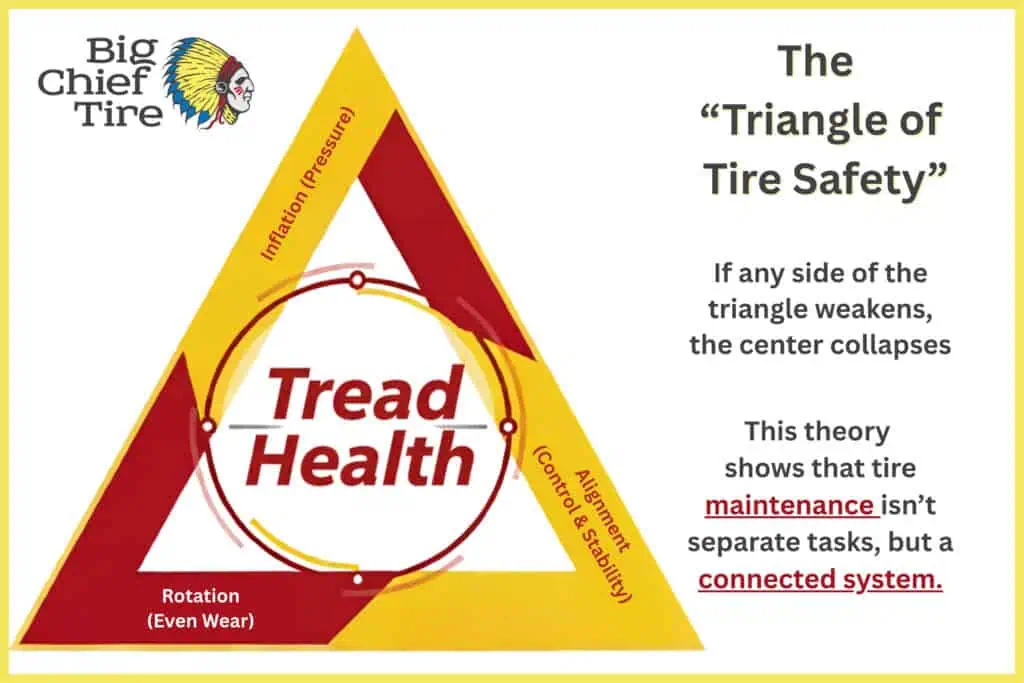
Every tire wears differently, and that wear is one of the clearest indicators of how your car is performing. Look closely at tread patterns, and you are not just measuring safety; you are reading a record of inflation habits, alignment accuracy, and suspension health.
Checking tread depth
- The penny test: Insert a penny into the tread with Lincoln’s head upside down. If you can see the top of his head, the tread is below 2/32 of an inch, and it is time to replace the tire.
- Built-in wear bars: Modern tires have small horizontal bars that appear across the tread when the tire is worn to its limit.
- Tread depth gauge: A simple tool that gives an accurate reading, often used by professionals.
Common wear patterns
- Center wear: Caused by overinflation, where too much pressure puts extra stress on the middle of the tire.
- Edge wear: Often a sign of underinflation, with weight carried more by the sides of the tire.
- Cupping or scalloping: A pattern of high and low points in the tread, usually from worn shocks or struts.
- Feathering: Tread blocks worn more on one edge, typically caused by misalignment.
Why it matters
Tread depth does not just affect grip on the road, it also reveals how well your car’s systems are working together. Uneven wear often points to bigger issues with suspension, alignment, or inflation. Spotting these patterns early helps you address the root cause instead of just replacing tires more often.
Tire Lifespan and Replacement
Tires are designed to deliver thousands of miles of reliable service, but no tire lasts forever. Age, driving habits, road conditions, and climate all play a role in how long your tires remain safe. Understanding when and why to replace them helps you plan ahead instead of waiting for a roadside emergency.
How long tires last
- Mileage: Most passenger car tires last about 50,000 miles, though performance tires may wear out sooner and touring tires may last longer.
- Age: Even if the tread looks healthy, rubber compounds break down over time. Most experts recommend replacement at six years, and never beyond ten years, regardless of mileage.
- Climate impact: Heat speeds up rubber aging. In hot states like Florida, tires may lose elasticity and strength faster than in cooler regions.
Signs it is time to replace
- Low tread depth: Below 2/32 of an inch is legally unsafe.
- Cracks and bulges: Sidewall cracks or bulges suggest a weakened structure.
- Frequent air loss: Needing constant refills points to internal or rim issues.
- Vibration and noise: Excessive shaking or road noise may signal internal tire failure.
Replacing two vs. four tires
- All four at once: Ideal for balanced handling and braking.
- Two at a time: Acceptable if the other pair still has good tread. Always place new tires on the rear axle for stability, even in front-wheel drive cars.
Why Routine Maintenance Is the Best Tire Care
So far, we have covered the key aspects of tire care, right from tread depth and pressure checks to balancing, rotation, and alignment. Each step plays an important role, but the most effective way to protect your tires is by scheduling regular maintenance.
When you stay consistent with routine auto repair, your tires are automatically reviewed by experts. Pressure, tread wear, suspension, and alignment are checked as part of standard service, allowing potential problems to be caught early. This prevents sudden breakdowns and keeps your tires performing at their best.
Beyond Maintenance: Dealing with Tire Emergencies
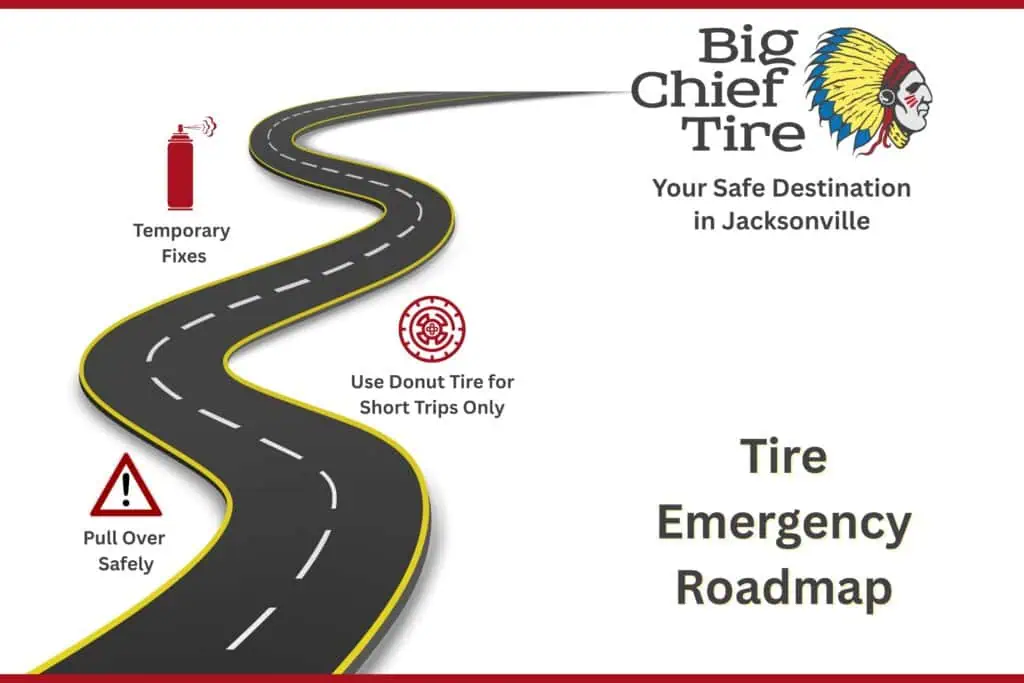
Even with consistent care, unexpected tire problems can happen. Knowing how to react in those moments is just as important as regular maintenance.
Handling a flat tire
- Prioritize safety: Slow down gently, switch on hazard lights, and pull over in a safe spot away from traffic.
- Use the spare correctly: Compact spares, or “donuts,” are designed for short distances at lower speeds, just enough to get you to a repair shop.
- Keep basic tools: A jack, lug wrench, flashlight, and gloves make the process quicker and safer if you need to change a tire yourself.
Blowouts at higher speeds
A sudden blowout can feel alarming, especially on the highway. Stay calm, hold the steering wheel firmly, ease off the accelerator, and let the car slow naturally before pulling over. Avoid slamming on the brakes, which can make the vehicle unstable.
Temporary repair options
Sealant kits and portable inflators can be useful for small punctures, allowing you to reach a service center. These are temporary fixes only, a damaged tire should always be inspected and repaired or replaced by professionals.
Let Big Chief Tire in Jacksonville, FL Handle Your Routine Car Maintenance
Tire care is all about keeping your entire vehicle safe and dependable on the road. For drivers across Jacksonville and the surrounding communities, Big Chief Tire has built a reputation as a locally owned business committed to serving families, commuters, and businesses with the kind of personal attention only a community-focused shop can provide.
With convenient locations on the Westside, Southside, Blanding, Northside, Mandarin, and Orange Park, we make it easy to keep up with regular maintenance. Each shop offers complete auto services under one roof, including tire sales and repairs, wheel alignment service, brake inspections, oil change service, tune up service, and even auto air conditioning service to keep your ride comfortable year-round.
By choosing a reliable tire shop like ours, that understands the roads and weather of Jacksonville, you are doing more than extending the life of your tires, you are protecting your safety, your passengers, and your community. Big Chief Tire is here to make sure every mile you drive is secure, efficient, and worry-free. Schedule your service today and experience the difference of a local team dedicated to keeping Jacksonville drivers safe on the road.
