
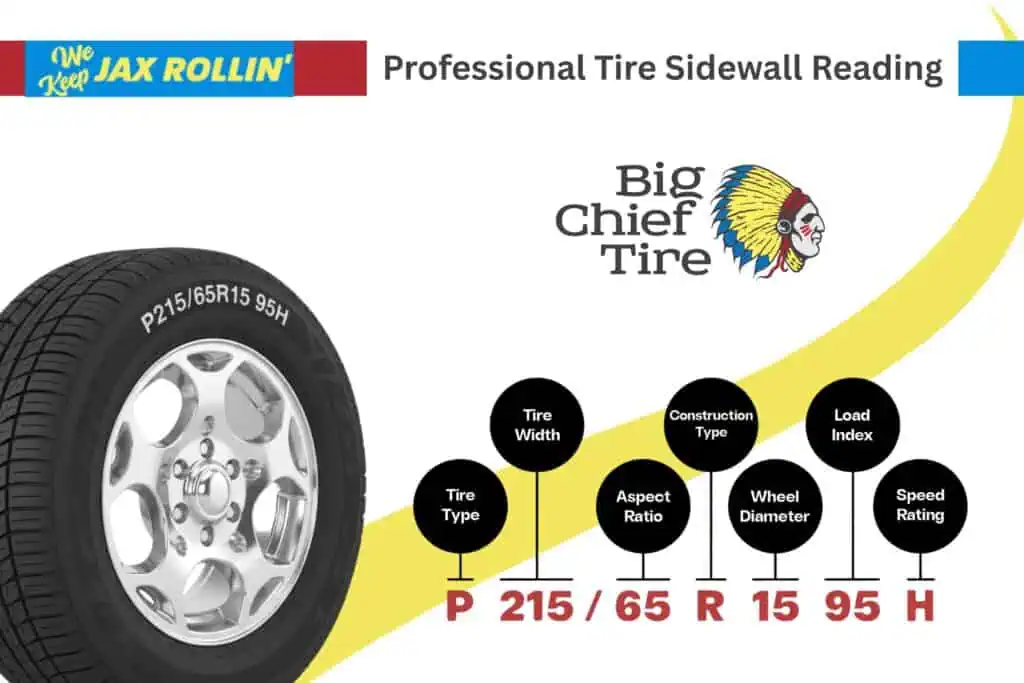
When you look at the side of your tire, you will see a mix of letters, numbers, and codes pressed into the rubber. At first glance, they may look confusing, but every character serves a purpose. Together, these sidewall markings tell you the tire’s size, construction, load capacity, performance rating, and even its age.
Understanding them makes it easier to buy the right tire, avoid unsafe mismatches, and protect your vehicle’s performance.
This guide, crafted by tire shop experts in Jacksonville, FL, explains everything you need to know about sidewall codes so you can shop for tires with confidence and know exactly what fits your vehicle.
Why Sidewall Markings Matter
Tire sidewall markings are not decorative details; they are critical for safety and performance. If you install a tire with the wrong specifications, it can affect how your car handles, how quickly the tires wear, and even how your brakes perform in an emergency.
For example, a tire with the wrong load rating may not be able to support your vehicle’s weight, creating a serious safety risk. A mismatched speed rating can reduce stability at highway speeds.
These markings also help you spot older tires that may no longer be safe. Rubber naturally breaks down over time, and even a tire that looks “new” on the outside could be past its safe service life.
Reading the sidewall ensures you are not guessing about something as important as your vehicle’s only point of contact with the road.
Breaking Down a Tire Code Example
Let’s take a closer look at a typical code: P215/65R15 95H.
- P – This shows the tire type. “P” means passenger vehicle, while “LT” is for light trucks. Matching the right type is important because truck tires are built for heavier loads and different handling requirements.
- 215 – This number represents the tire’s width in millimeters. Wider tires may provide more grip, but they must match the specifications of your wheels and suspension.
- 65 – This is the aspect ratio, which shows the sidewall height as a percentage of the width. In this case, the sidewall height is 65% of 215 mm. A lower ratio means a sportier look and sharper handling, but it can also create a harsher ride.
- R – The construction type. Most modern tires are “R” or radial construction, which provides strength, comfort, and long tread life.
- 15 – This is the wheel diameter in inches. It must match your rim size exactly.
- 95 – The load index. This code indicates the maximum weight the tire can safely carry when properly inflated. Choosing too low a load index can lead to premature wear or even blowouts.
- H – The speed rating. This tells you the maximum speed the tire can safely handle. While most drivers will never reach these limits, a higher rating often means better heat resistance and stability.
Every part of this code matters. Together, they ensure that your tire is correctly matched to your vehicle’s needs.
Additional Markings You Should Know
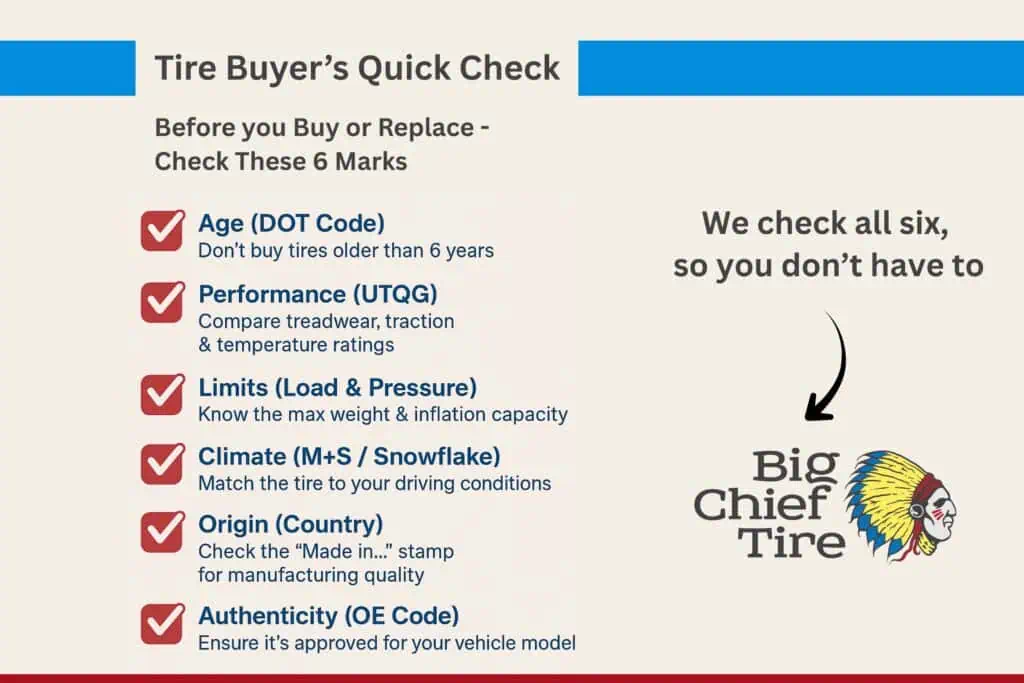
Beyond the main size and specification code, sidewalls include other useful details:
- DOT and Date Code – After the letters “DOT,” you will find a series of digits. The last four numbers reveal when the tire was manufactured. For example, “3319” means the 33rd week of 2019. Tires older than six years are often considered unsafe, even if they have not been heavily used. Always check this before buying replacements.
- UTQG Ratings – The Uniform Tire Quality Grading system gives you three scores: treadwear, traction, and temperature resistance. They provide an easy way to compare one tire’s durability and performance against another.
- Maximum Load and Pressure – These figures show the tire’s absolute limits. They are not the recommended settings for daily use but tell you the maximum weight and inflation the tire can withstand safely.
- M+S or Snowflake Symbol – “M+S” stands for mud and snow, while the three-peak mountain snowflake icon confirms the tire meets official winter performance standards. This matters less in Florida but is important for drivers who travel to colder regions.
- Country of Manufacture – A “Made in…” stamp shows where the tire was produced. Some buyers prefer specific manufacturing origins for quality assurance.
- OE Codes – Some tires carry marks showing they were designed as “Original Equipment” for a particular car brand. This helps drivers replace their tires with manufacturer-approved models.
Checking these details is an important part of overall tire care, helping you avoid unsafe or mismatched tires
Tire Size vs. Tire Specs
It is easy to confuse tire size with tire specifications, but they are not the same. Tire size refers to the physical dimensions, width, aspect ratio, and rim diameter. Tire specs include the performance-related codes like load index, speed rating, and UTQG grades. Both must be correct for your vehicle.
For example, installing a tire that fits your rim but has a lower load index than recommended can reduce safety and shorten the life of your suspension. On the other hand, buying a tire with the right specs but the wrong size may cause clearance issues or interfere with your traction control system.
Overall Tire Dimensions
Besides the numbers on the sidewall, overall dimensions also play a role in performance:
- Overall Diameter – This is the full height of the tire from the ground to the top of the tread. If it is too tall or too short, it can affect ground clearance, suspension geometry, and the accuracy of your speedometer.
- Circumference – This is the distance around the tire. It determines how many revolutions per mile your tire makes, which can influence gear ratios and fuel economy.
Changing overall tire dimensions without professional advice can create rubbing issues or confuse electronic systems. Always confirm with a technician before upsizing or downsizing.
Intended Use Markings
Many sidewalls also reveal what the tire is designed for:
- All-Season – Balanced for year-round use in mild conditions.
- Winter – Built with softer rubber compounds and special tread for snow and ice.
- Mud-Terrain / All-Terrain – Aggressive tread for off-road use.
- Touring / Performance – Optimized for comfort, handling, or speed.
This makes it easier to choose a tire that fits your driving habits, whether you are commuting daily, traveling long distances, or exploring rougher terrain.
Local Insight for Jacksonville Drivers
Jacksonville’s climate makes tire markings especially important. Our hot summers accelerate rubber aging, so checking the DOT date code is essential. Heavy rains mean you should pay attention to traction ratings, since hydroplaning is a real risk on local highways. Even if you are not driving through snow, making sure your tires are fresh and properly rated ensures safety on wet roads and in high heat.
Buy the Right Tires with Big Chief Tire – Your Trusted Tire Shop in Jacksonville, FL
Now that you know how to read tire sidewall markings, you can make smarter decisions about what fits your car. But if you would rather leave the details to professionals, Big Chief Tire is here to help.
As a locally owned tire store in Jacksonville, we have been serving drivers for more than 60 years. We carry top-quality brands at fair prices, and we will match any competitor’s offer to give you the best deal. If we do not have your exact tire in stock, we will order it quickly and install it for you.
Visit our site to browse options online, or stop by one of our convenient locations for expert recommendations. From tire sales and installations to repairs, alignments, and brake service, Big Chief Tire keeps Jacksonville drivers safe on the road.
Call us today or request a tire quote online. The right tires, and peace of mind, are just one visit away.

