
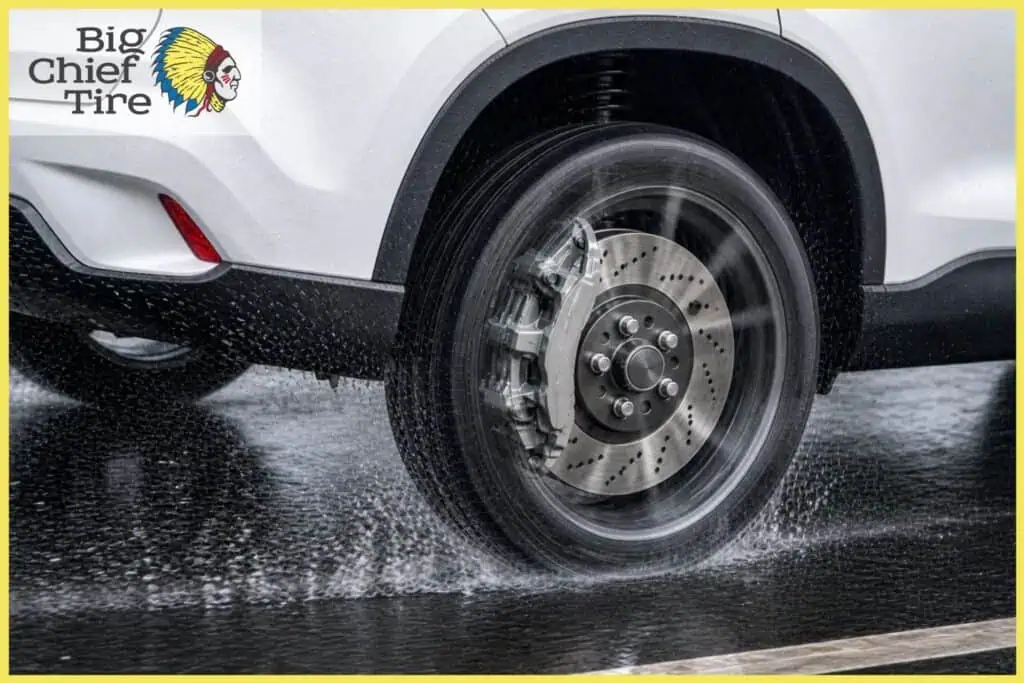
Brakes rarely fail without warning; they give signs, and most drivers ignore them until conditions force the issue. In dry weather, worn pads can feel acceptable. Schedule a brake inspection before Jacksonville’s rainy season, and you stay ahead of it. Wait until June, and you’re making that decision on a wet I-95 with less stopping distance than you think you have.
Jacksonville receives around 120 days of rain annually, with the heaviest stretch running from June through September. Rain is a leading contributor to accidents in the city, particularly during the summer rainy season when roads become slick and visibility drops, especially on highways and bridges. For drivers running worn brake pads into that season, the risk is real and preventable.
What Rain Actually Does to Your Braking System
Brakes work differently in wet conditions than most drivers realize. When rain hits your rotors, a thin film of water temporarily reduces the friction between pad and rotor on the first brake application. This clears within one or two firm stops as braking heat evaporates moisture off the rotor face, but in an emergency, that first application is the one that matters most.
The numbers make the risk concrete. At 60 mph on dry pavement, a well-maintained car stops at roughly 130 to 140 feet. In rain with good brakes, budget 180 to 200 feet minimum. Add worn pads to that equation, and the number climbs significantly further.
Even the best brakes can’t stop a car that is hydroplaning. When your tires lose contact with the road, your braking system becomes a passenger. We check your tire tread depth during every brake inspection because the two systems must work in harmony to keep you on the road.
Worn pads and worn tires are multipliers; each alone extends wet stopping distance; together they can nearly double it. For drivers on I-95 or I-295 during Jacksonville’s afternoon downpours, that extra distance is the difference between stopping safely and a collision.
Why Jacksonville Conditions Accelerate Brake Wear
Heat is the biggest factor. Jacksonville’s summer temperatures push underhood temperatures well above ambient, and brake components sit in that heat every day. High temperatures accelerate brake fluid degradation and can cause brake fade, leading to repeated hard stops that make the brakes feel spongy and less responsive.
Stop-and-go traffic on routes like Beach Boulevard, Philips Highway, and US-1 compounds this. Urban driving with frequent stops contributes to faster brake pad wear than highway driving, where braking is less frequent. Drivers covering these routes daily are putting significantly more wear on their brake pads than the mileage alone would suggest.
Warning Signs Your Brakes Need Attention Before the Rains
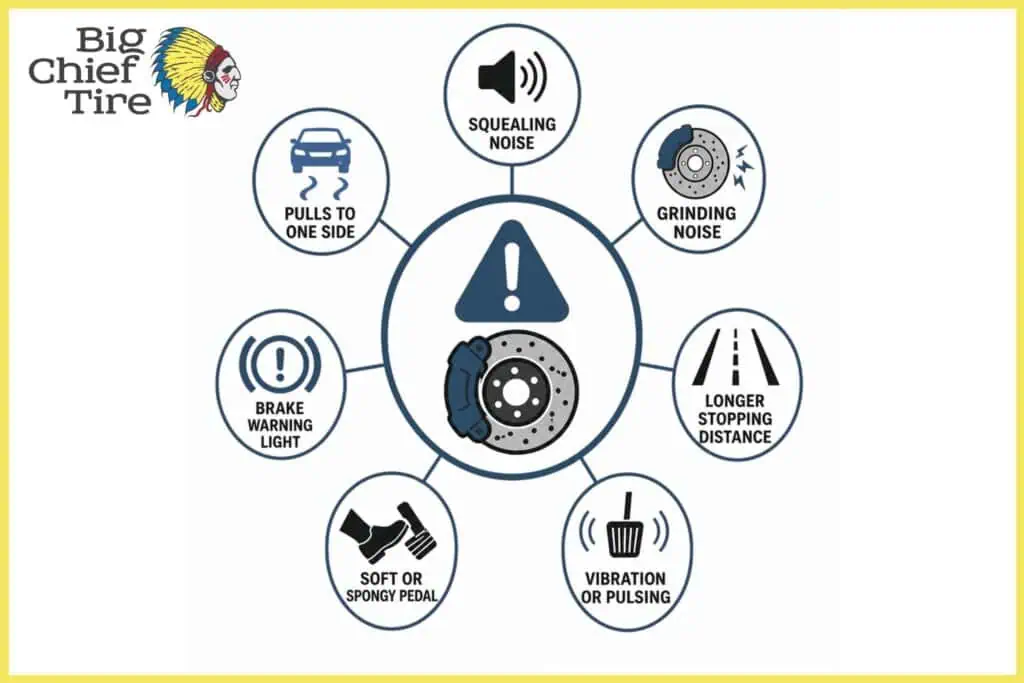
Brake wear rarely announces itself dramatically. Watch for these signs before the rainy season arrives:
- Squealing or squeaking when braking is the most common early warning sign
- Grinding noise when stopping, metal-on-metal contact, replacement is urgent
- Longer stopping distances than you’re used to
- The brake pedal feels soft, spongy, or sinks lower than normal
- Vibration or pulsing through the pedal when braking
- The car pulls to one side when braking
- The brake warning light appears on the dashboard
Wet weather reveals marginal brake conditions that dry driving masks. If your brakes have felt adequate in dry conditions but noticeably soft or less responsive in rain, low pad thickness is often the reason.
What a Brake Inspection Actually Covers
A proper brake inspection goes beyond checking whether the car stops. It includes:
- Brake pad thickness measurement on all four wheels – pads wear at different rates depending on driving patterns and heat exposure. Measuring all four ensures no wheel is being overlooked before the rains arrive.
- Brake rotor wear check for warping, scoring, and surface damage – worn rotors reduce the contact area between pad and rotor, extending stopping distances even when pads still have life left. In Jacksonville’s heat, rotors take more thermal stress than in cooler climates.
- Brake fluid level and condition – degraded brake fluid absorbs moisture over time, which lowers its boiling point and reduces braking performance under repeated hard stops. Florida’s humidity accelerates this process faster than in drier climates.
- Caliper inspection to ensure even pad pressure – a sticking caliper causes one pad to wear significantly faster than the other, creating uneven braking and pulling to one side when stopping on wet roads.
- Brake line check for leaks or corrosion – small leaks in brake lines reduce hydraulic pressure and can cause the pedal to feel soft or spongy. Catching this before the rainy season is critical, as wet roads require full braking response.
Anything under 4mm of pad thickness warrants replacement before the rainy season, not after. Catching this now avoids a situation in which marginal brakes meet wet roads and a sudden stop occurs simultaneously.
Get Your Brakes Inspected at Big Chief Tire
Big Chief Tire provides brake inspection and repair services across all six Jacksonville and Orange Park locations. If you’ve noticed any of the warning signs above, or if it’s been more than a year since your last brake check, now is the right time before Jacksonville’s rainy season arrives.
Our technicians will check pad thickness, rotor condition, and fluid levels, and give you an honest assessment of what your brakes need before the wet months hit.
While you’re in, it’s also worth getting everything else summer-ready. Our auto repair services cover tire condition, wheel alignment, fluid checks, and a full tune-up to ensure your vehicle is prepared for whatever Jacksonville’s rainy season brings.
Visit any of our six tire repair shop locations or schedule your appointment online.

