Many drivers assume tire rotation and wheel alignment are the same thing; both keep your tires healthy, right? Not quite. While these two services often appear together on maintenance schedules, they serve entirely different purposes.
Understanding what each one does, how often to schedule them, and why both matter can help you extend tire life, improve handling, and stay safe on Jacksonville’s busy roads.
This guide, written with insights from tire shop experts, explains everything you need to know about tire rotation and wheel alignment, and how they work together to keep your car performing at its best.
Tire Rotation Explained
Tire rotation is the process of moving your tires to different positions on your vehicle to ensure even wear. Because your front tires handle steering, braking, and more weight from the engine, they tend to wear faster than the rear ones. By regularly changing their positions, you balance out this wear and help all four tires last longer.
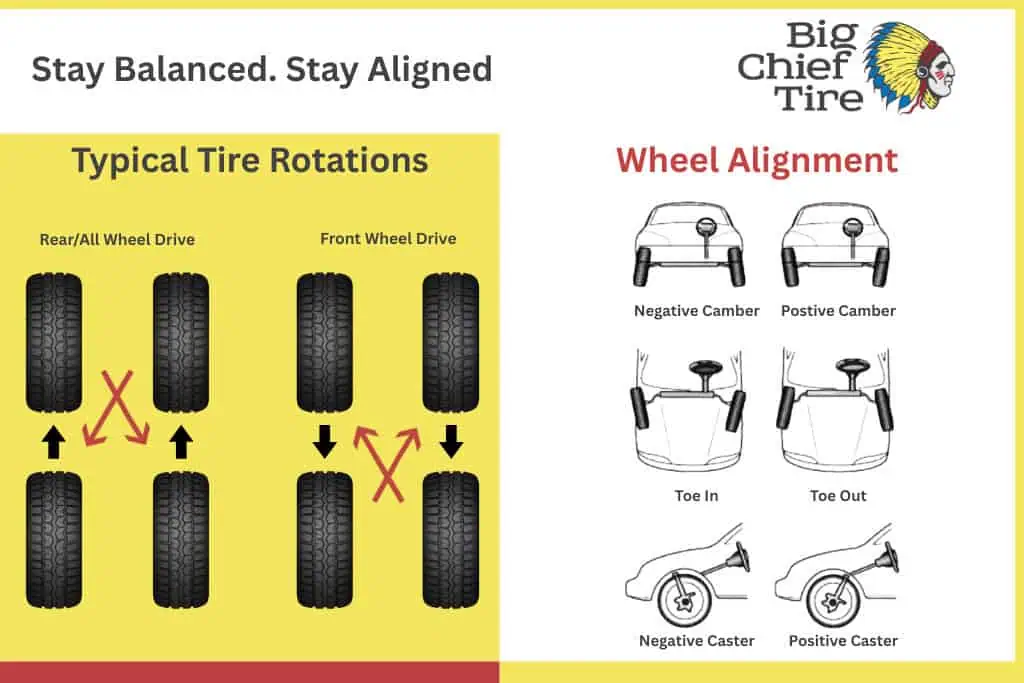
A standard rotation pattern might move the front tires to the rear and cross them side-to-side. However, the exact pattern depends on your vehicle’s drivetrain (front-wheel, rear-wheel, or all-wheel drive) and the type of tires you use.
When to Rotate Tires
Most manufacturers recommend a tire rotation every 5,000 to 7,500 miles, or roughly every other oil change. For performance, off-road, or heavy-duty tires, shorter intervals may be better. A trusted tire shop in Jacksonville can check your tread depth and suggest an ideal schedule based on your driving habits.
Signs You May Need a Rotation
- Uneven tread wear between front and rear tires
- Increased vibration or road noise
- Noticeable pulling or change in handling
- Front tires are wearing down faster than the rears
Benefits of Regular Rotation
- Promotes even tread wear for longer tire life
- Improves ride comfort and traction
- Helps maintain balanced handling and braking
- Allows technicians to inspect air pressure, tread, and sidewalls regularly
Skipping rotations can cause two tires to wear out faster than the others, forcing premature replacement of all four.
Wheel Alignment Explained
While tire rotation moves tires around, wheel alignment focuses on how your wheels are angled and how they contact the road. Every vehicle’s suspension is designed with precise angles, known as camber, caster, and toe, that keep the car tracking straight and the tires wearing evenly.
- Camber refers to the inward or outward tilt of the tire when viewed from the front.
- Caster affects steering stability and how your steering wheel returns to center.
- Toe describes whether your tires point slightly inward or outward when viewed from above.
When these angles go out of balance, often after hitting a curb, pothole, or simply through normal wear, your tires start to wear unevenly, and your steering may feel off. That is your car’s way of telling you it’s time for a wheel alignment service.
When to Check Alignment
Get an alignment check at least once a year, or immediately after:
- Installing new tires
- Hitting a curb or pothole
- Experiencing pulling or uneven tread wear
Many Jacksonville drivers wonder whether alignment service is worth the investment, especially if their car seems to drive fine. The answer depends on your vehicle’s current condition, driving habits, and local road challenges. For a detailed cost-benefit analysis, see our guide on whether a $100 wheel alignment is worth it.
Benefits of Proper Alignment
- Extends tire lifespan by preventing uneven wear
- Improves steering precision and control
- Boosts fuel efficiency by reducing rolling resistance
- Protects suspension components from strain
How Tire Rotation and Wheel Alignment Work Together
Tire rotation and wheel alignment are often grouped together for good reason, they complement each other to keep your vehicle balanced, efficient, and safe. Rotation evens out physical tread wear, while alignment ensures that wear happens correctly in the first place.
When both are maintained properly, every tire contributes equally to handling, traction, and braking performance. If either one is skipped, the other quickly loses its benefits. For instance, rotating tires on a vehicle with poor alignment simply spreads uneven wear patterns across all four tires. Similarly, aligning wheels on tires that are already unevenly worn won’t restore lost tread life, it only locks in the existing imbalance.
Another reason these two services go hand in hand is diagnostic insight. During a rotation, technicians often spot early signs of misalignment, uneven tread depth, edge wear, or feathering, before they become severe. Likewise, an alignment check can reveal suspension or tire pressure issues that rotations alone might miss.
In short, rotation and alignment together form a feedback loop of tire care: rotation preserves alignment’s benefits, and alignment makes rotation worthwhile. When both are part of your maintenance routine, your tires last longer, your fuel economy improves, and your ride stays smoother over Jacksonville’s varied road conditions.
Situations That Require Extra Attention in Tire Care
Some vehicles and setups demand special handling during rotation and alignment:
AWD and 4WD Vehicles
For all-wheel and four-wheel-drive models, tire rotation is even more critical. A slight difference in tread depth between front and rear axles can strain the drivetrain and differential.
Most manufacturers recommend shorter rotation intervals for these vehicles, often around 3,000–5,000 miles. Always refer to your owner’s manual for the exact guidance.
Directional, Asymmetric, or Staggered Tires
Certain tire types have rotation limits.
- Directional tires (with a V-shaped tread) must stay on the same side of the car.
- Asymmetric tires have an inside and outside face that can’t be flipped.
- Staggered setups — where rear tires are wider than the fronts — sometimes can’t be rotated at all.
Following the manufacturer’s pattern recommendations helps maintain grip and even wear.
TPMS Reset After Rotation
Many modern cars use a tire pressure monitoring system (TPMS) that tracks pressure at each wheel. After rotation, some vehicles need a quick “relearn” process so the sensors match their new positions. Without it, your warning light might show the wrong tire location even if the readings are correct. Professional tire services can handle this reset in minutes.
Why Trust Experts for Tire Care
According to U.S. Department of Energy studies on vehicle fuel efficiency, incorrect or neglected wheel alignment increases rolling resistance, forcing the engine to work harder and lowering gas mileage by up to 10 percent over time. When your tires are even slightly misaligned, they “fight” the road instead of rolling freely, creating extra friction that leads to higher fuel consumption and faster tire wear.
Tire rotation, too, requires precision. Rotating tires without following the correct pattern or torque settings can cause uneven tread wear and affect handling. Both services demand trained professionals who understand the finer details of your vehicle’s suspension and tire design.
That is why visiting a trusted tire shop in Jacksonville makes such a difference. Certified technicians use advanced alignment tools, accurate torque calibration, and expert inspection methods to keep your tires balanced, your car efficient, and your drives smoother.
Big Chief Tire – A Complete Tire Shop For Your Tire Care in Jacksonville, FL
By now, you must have understood why tire rotation and wheel alignment work best when done together. So when it is time for your next service, trust the experts who have been serving Jacksonville drivers for over 60 years.
At Big Chief Tire, your trusted tire shop in Jacksonville, we provide professional tire services, including rotations, alignments, balancing, and complete auto repair. Our qualified mechanics ensure every tire is installed correctly, balanced, and aligned for a smoother, safer ride.
Visit your nearest Big Chief Tire location across Jacksonville, Westside, Southside, Northside, Mandarin, Blanding, or Orange Park, and experience expert care from a local team that values honesty, quality, and safety.
Book your service today and keep your vehicle running at its best.