

Introduction:
You are driving through Jacksonville’s traffic when a small yellow horseshoe symbol with an exclamation mark flashes on your dashboard. It is the Tire Pressure Monitoring System (TPMS) light, your car’s way of saying something about your tires needs attention.
But when you step out and check, everything looks fine. No flat tires, no visible leaks. So why is that light still on?
This situation is more common than most drivers realize. In Florida’s humid and often unpredictable climate, tire pressure can fluctuate quickly. Understanding how your TPMS works and what might trigger that alert, even when your tires appear normal, helps you stay safe, save fuel, and extend your tire life.
If the warning persists, visiting a trusted tire place in Jacksonville is the safest way to identify whether it is a simple pressure change or a sensor issue.
So before that flickering light puts you in a panic zone, let us understand what it really means and when it actually calls for attention.
How the TPMS Works
Your vehicle’s TPMS is designed to monitor tire pressure continuously and alert you when one or more tires fall below safe levels.
There are two main types of systems:
Direct TPMS:
Each wheel has a small pressure sensor installed inside the tire, usually attached to the valve stem. These sensors read real-time air pressure and transmit data wirelessly to your vehicle’s onboard computer.
- If pressure drops below the manufacturer’s threshold (typically around 25% below the recommended PSI), the warning light turns on.
- Direct TPMS systems are more accurate and are common in most modern vehicles around Jacksonville.
Indirect TPMS:
This system does not measure air directly. Instead, it uses your ABS wheel-speed sensors to detect if one wheel is spinning faster than the others, a sign of reduced tire diameter caused by low air pressure.
- If one wheel rotates more times per mile than the others, the system interprets it as underinflation and triggers the light.
- These systems require recalibration after tire rotations or replacements to maintain accuracy.
Both systems are sensitive to temperature, humidity, and tire condition, which means in Florida’s warm, damp environment, readings can fluctuate more than expected.
Why the TPMS Light Comes On Even When Tires Look Fine
The TPMS light does not always mean you have a flat tire. Here are deeper explanations for why it might turn on:
Temperature Fluctuations: Air expands when it is warm and contracts when it is cold. For every 10°F drop in temperature, tire pressure decreases by roughly 1–2 PSI. Jacksonville mornings can start humid and cool, then turn hot and dry by midday, enough to confuse the sensors.
Example: A tire filled to 35 PSI in the afternoon might measure 31 PSI the next morning, just enough to trigger the light.
Recent Tire Work or Calibration Errors: Indirect TPMS systems rely on a baseline calibration. If that baseline was set when tires were under- or overinflated, your dashboard might show a warning even when pressure is normal.
Sensor Sensitivity Differences: Not all cars use the same thresholds. Some manufacturers program TPMS lights to activate with a small 10–15% pressure variation. Others wait until a full 25% drop.
The result: a “false alarm” that is technically correct but exaggerated.
Sensor Malfunction or Battery Depletion: TPMS sensors use small, sealed lithium batteries that typically last 7–10 years. Over time, these weaken, especially in humid climates. A dying battery or corroded sensor can send incorrect data to your dashboard.
Pressure Differences Between Front and Rear Tires: Uneven loading or inconsistent inflation can confuse the TPMS if the difference between the front and rear pressures exceeds 2–3 PSI.
In short, the light may not mean your tires are unsafe, but it always means something changed.
When to Be Concerned: Steady vs Flashing TPMS Light
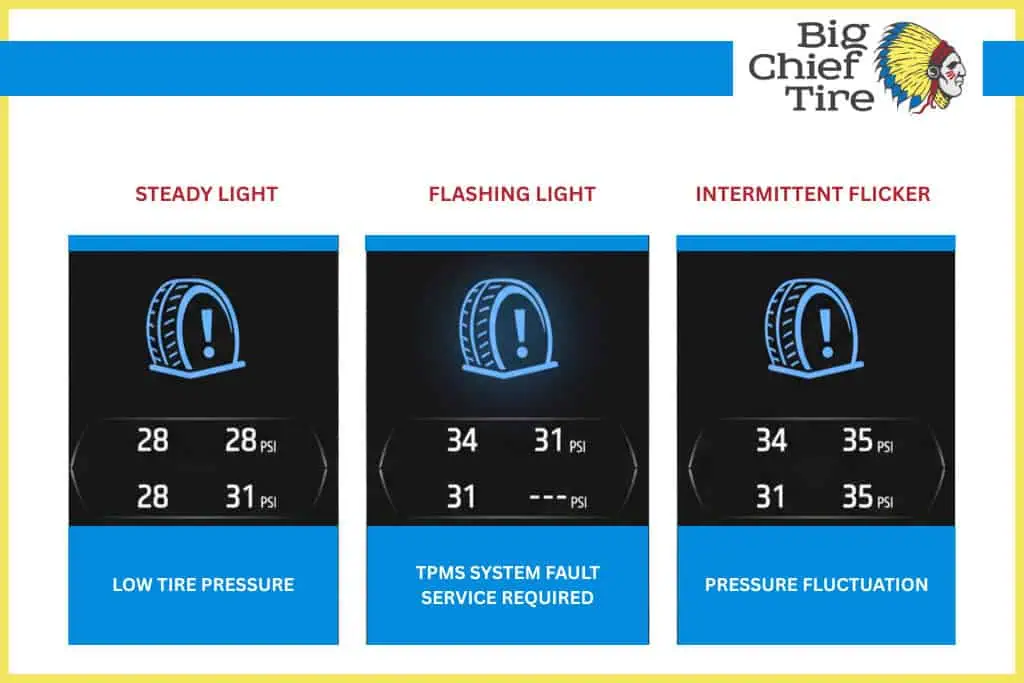
Your TPMS light’s behavior can tell you a lot before you even check a tire:
- Steady Light:
Indicates one or more tires are underinflated. This is the most common signal and means your PSI is at least 25% below the recommended level. Driving too long this way increases tire wear, reduces fuel economy, and can overheat the sidewalls. - Flashing Light (for 30–90 seconds, then steady):
Suggests the TPMS system itself has a malfunction. It could be a dying sensor battery, corrosion in the valve stem, or communication failure between the sensor and the onboard computer. - Intermittent Flicker:
Often related to changing weather. The pressure may drop slightly overnight, trigger the light in the morning, then rise as the tires warm during your commute. This is typical in humid climates like Jacksonville’s.
If the light flashes continuously or appears alongside other warnings like ABS or traction control lights, it’s best to schedule a diagnostic inspection.
What to Check Before Visiting a Tire Shop
When your TPMS light turns on, it does not always mean you need a repair right away. In many cases, it’s something simple you can check yourself. Here’s what Jacksonville drivers can do before heading to a tire shop:
1. Walk Around Your Vehicle
Look for any tire that appears flatter than the others, bulging sidewalls, or uneven tread. Sometimes the TPMS light picks up slow leaks before they are visible to the eye.
2. Check Tire Pressure Manually
Use a reliable tire pressure gauge to measure each tire’s PSI, ideally when the tires are cold, before driving. Compare the readings to the recommended levels listed inside your driver’s door or owner’s manual.
3. Note Any Pressure Differences
If one tire is 3 PSI or more below the others, add air gradually and recheck. Small variations can trigger the light even when the tires look fine.
4. Try a TPMS Reset
After correcting the air pressure, you can try resetting the system. Turn the ignition to “ON,” press the TPMS reset button (often below the steering wheel) until the light blinks, then drive for 10–15 minutes so the sensors can recalibrate. If the light returns, it’s time to have a technician check the system.
When Professional Tire Repair Shop Help Is Needed
If you have verified your pressures and the TPMS light remains on, there may be an internal issue. A technician can perform the following diagnostics:
- Sensor Battery Check: Using a scan tool, professionals can detect whether one or more sensors are sending weak or inconsistent signals.
- Valve Stem and Sensor Cleaning: Over time, oxidation builds up around the metal stem, causing poor connections or slow air loss.
- System Recalibration: For indirect TPMS systems, recalibrating the baseline after new tires or rotations ensures accuracy.
- Software Reset: Some vehicles need TPMS data cleared through the onboard system. This cannot be done manually without the proper tool.
At Big Chief Tire, our tire experts routinely test and reprogram TPMS sensors during tire rotations or oil changes. These checks take only a few minutes but prevent months of recurring false alerts.
Cost, Maintenance, and Sensor Lifespan
Many drivers assume TPMS components last as long as their tires, but that’s rarely true.
Sensor Life Expectancy:
Each sensor’s sealed battery typically lasts 7-10 years, but exposure to road salt, heat, and humidity can shorten that by 2–3 years.
Replacement Costs:
Sensors generally cost $60–$100 each, including installation and programming. Replacing the full set during a new tire installation after 6 years is more efficient and cost-effective.
Why Full Replacement Makes Sense:
When one sensor battery dies, others are likely close behind. Replacing all four together prevents repeated labor costs and uneven performance across wheels.
Preventive Care:
- Clean valve stems and replace caps regularly.
- Avoid aftermarket sealants that can clog or damage sensors.
- Keep track of sensor installation dates to plan replacements before failure.
Local Insight: How Jacksonville Drivers Can Prevent TPMS Issues
Jacksonville’s coastal humidity and fluctuating temperatures make consistent tire pressure harder to maintain. A few small habits can help:
- Check Tire Pressure Once a Month in the Morning: Early hours provide the most stable readings before heat buildup skews PSI.
- Avoid Filling Tires After Long Drives: Always let tires cool for at least 30 minutes. Filling them hot traps excess air pressure once they return to normal temperature.
- Schedule a Sensor Scan During Oil Changes: It’s quick, inexpensive, and ensures the system communicates properly with your vehicle’s computer.
- Clean Valve Stems and Wheel Housings: Jacksonville’s moisture and occasional beach sand can cause corrosion around aluminum stems, reducing signal accuracy.
- Rotate Tires and Recalibrate: After each rotation, recalibrate indirect TPMS to prevent uneven sensor readings.
Big Chief Tire – Jacksonville’s Trusted Local Tire Experts

Your TPMS light is not just a dashboard symbol, it is your vehicle’s early warning system for tire health and safety. While false alerts can happen due to humidity or aging sensors, ignoring persistent warnings can lead to serious tire damage and poor fuel economy.
At Big Chief Tire, we help Jacksonville drivers keep their TPMS systems accurate and dependable. Our technicians inspect, recalibrate, and replace sensors as needed, ensuring your tires are inflated correctly for both safety and performance.
Routine tire care keeps your ride smoother, your tires lasting longer, and your fuel bills lower. To make tire maintenance easier for drivers across the city, there is always a Big Chief Tire place nearby to assist with tire inspections, rotations, and other diagnostics.
Visit your nearest tire shop today to keep your tires performing safely in Florida’s demanding heat and humidity.

