

Nobody thinks about their car’s AC until the vents stop blowing cold. In Jacksonville, that moment tends to arrive somewhere between April and May, right when you can least afford to deal with it.
This year, the window is even tighter. Jacksonville is already seeing near 90-degree highs in late March and is currently under exceptional drought conditions, according to News4JAX. Forecasts point to a warmer, drier summer than usual.
With the most intense heat arriving in early to mid-June, your AC system is not getting a gradual warm-up this year. April is the window, and it is closing faster than most drivers realize.
That is exactly why scheduling your auto AC repair in Jacksonville before peak summer matters more than ever this year.
Why Jacksonville Drivers Burn Through AC Systems Faster
In most parts of the country, car AC systems are used for five to six months a year. In Jacksonville, that number stretches to ten or even eleven months. Many drivers are running AC from March through November, and some use it year-round.
That constant usage changes how quickly components wear out.
Compressor seals, refrigerant hoses, and condenser components are all designed for a certain number of operating hours. Jacksonville drivers reach those limits much sooner because the AC system is in use most of the year.
Humidity makes the problem worse. Moisture accelerates internal corrosion and gradually weakens rubber seals. Over time, this leads to slow refrigerant leaks that often go unnoticed until the system struggles to keep up on the hottest days.
Warning Signs Your AC Needs Attention Now
Most AC systems do not fail suddenly. They show early signs, especially as temperatures begin to rise.
- Air that cools properly in the morning but struggles during hotter afternoons is often the first indication that the system is underperforming.
- If the cabin takes longer than usual to cool after starting the vehicle, it may signal low refrigerant levels or reduced compressor efficiency.
- A hissing or bubbling sound after turning the engine off can point to refrigerant movement or small leaks within the system.
- Cabin air that feels more humid than it used to may indicate that the AC system is no longer removing moisture effectively.
- Strange smells are another common warning sign. A musty or locker room type odor when the AC first starts often indicates mold or bacteria growth on the evaporator core. This is especially common in Jacksonville due to consistently high humidity.
- You may also notice oily or greasy residue around AC hoses or fittings under the hood, which is often a sign of refrigerant leakage.
Any of these signs mean your system should be inspected before temperatures peak.
What an AC Inspection Actually Involves
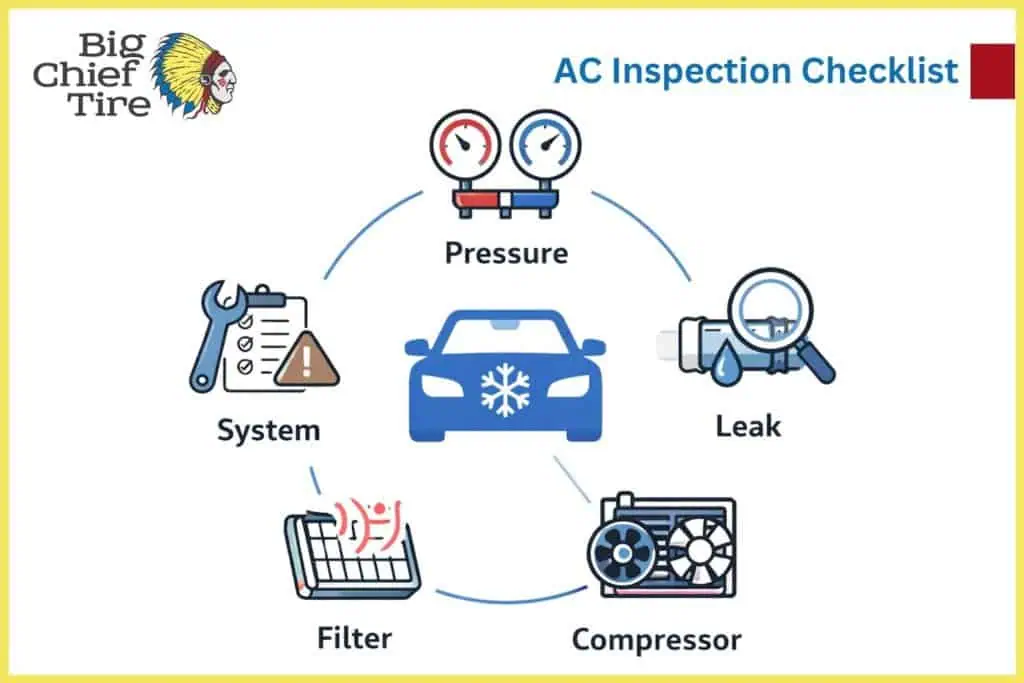
A proper AC service isn’t just topping off refrigerant. If refrigerant levels are low, there is usually a leak somewhere in the system. Recharging without addressing the source of the leak only provides temporary relief. The refrigerant escapes again, and over time, this can damage the compressor, one of the most expensive components to replace.
A thorough inspection typically includes:
- Pressure testing to evaluate refrigerant levels
- Leak detection to locate any loss points
- Compressor and condenser inspection
- Cabin air filter evaluation
- The system is recharged after any issues are resolved
Skipping the leak detection step is one of the most common and costly mistakes drivers make before summer sets in.
Why April and Not June For Your AC Check
There are two practical reasons.
First, auto AC repair shops become significantly busier once peak summer temperatures arrive. Scheduling in April allows for faster turnaround and greater flexibility.
Second, early inspection gives you time to address any issues properly. What seems to work at 75-80 degrees may fail completely once temperatures reach the mid-90s.
Discovering a failing compressor or leak in June often means driving in uncomfortable heat while waiting for parts or appointments.
An early inspection is inexpensive. A mid-summer failure is not.
Get Your AC Checked At Big Chief Tire in Jacksonville Before the Heat Hits
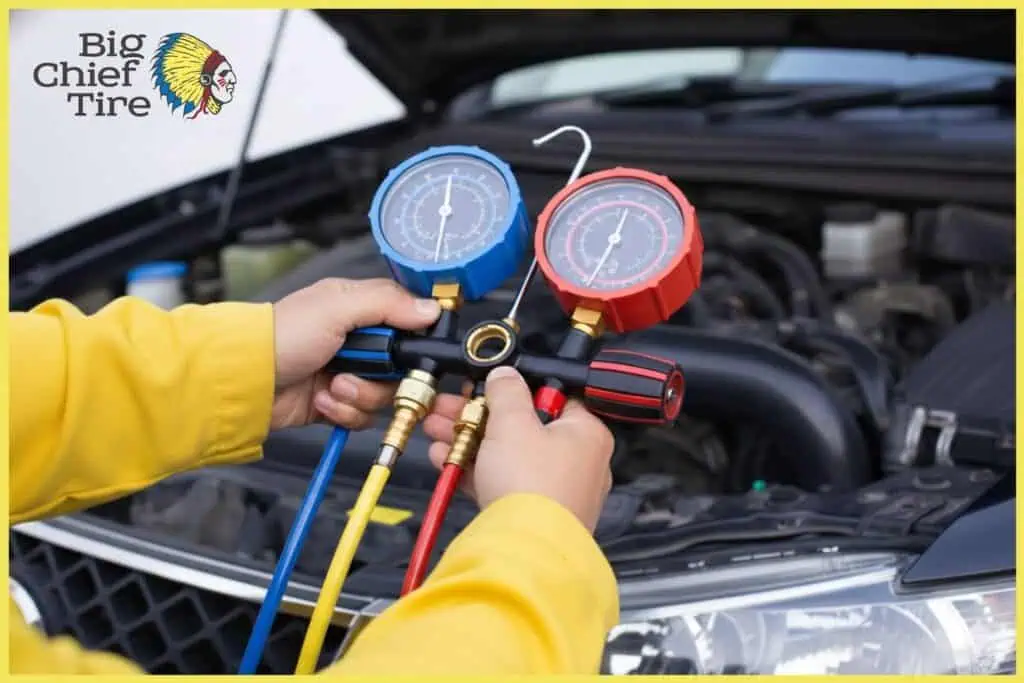
April is the best time to catch AC issues before summer demand peaks and temperatures push your system to its limits. Waiting until the system fails often means longer wait times, higher repair costs, and uncomfortable drives down I-95 in July.
Big Chief Tire provides auto AC repair at all six locations in Jacksonville and Orange Park. Whether your system needs a simple recharge or a more in-depth repair, our technicians can identify the issue early and help prevent a mid-summer breakdown.
And while you’re in, it’s a good time to get everything else summer-ready too. Our auto repair services cover everything your vehicle needs before peak heat season, right from fluid checks to brake inspection to tire condition.
Schedule your AC inspection at the Big Chief Tire location nearest you and stay ahead of the heat this summer.
Frequently Asked Questions
How do I know if my AC needs a recharge or a full repair?
You won’t know without a pressure test and leak inspection. A recharge is only the right fix if the system is slightly low with no active leak. If there’s a compressor issue, condenser damage, or a significant leak, adding refrigerant alone won’t solve the problem and may make it worse.
Is it okay to keep driving if my AC isn’t blowing cold?
Technically, yes, but running a low-refrigerant system puts strain on the compressor. The longer you drive with a struggling system, the more likely you are to turn a minor repair into a major one. In Jacksonville’s heat, a failing AC also becomes a health concern, especially with children or elderly passengers in the vehicle.
How often should AC be serviced in Florida?
There’s no fixed schedule, but annual inspections make sense for Jacksonville drivers, given how heavily the system gets used. If you notice any of the warning signs listed above, don’t wait for your next scheduled service.

