Normandy Boulevard has been a concern for Westside Jacksonville drivers for some time. According to News4JAX, safety concerns along the corridor have grown significant enough that FDOT is now considering a $300 million improvement project, a sign of just how rough conditions on this road have become.
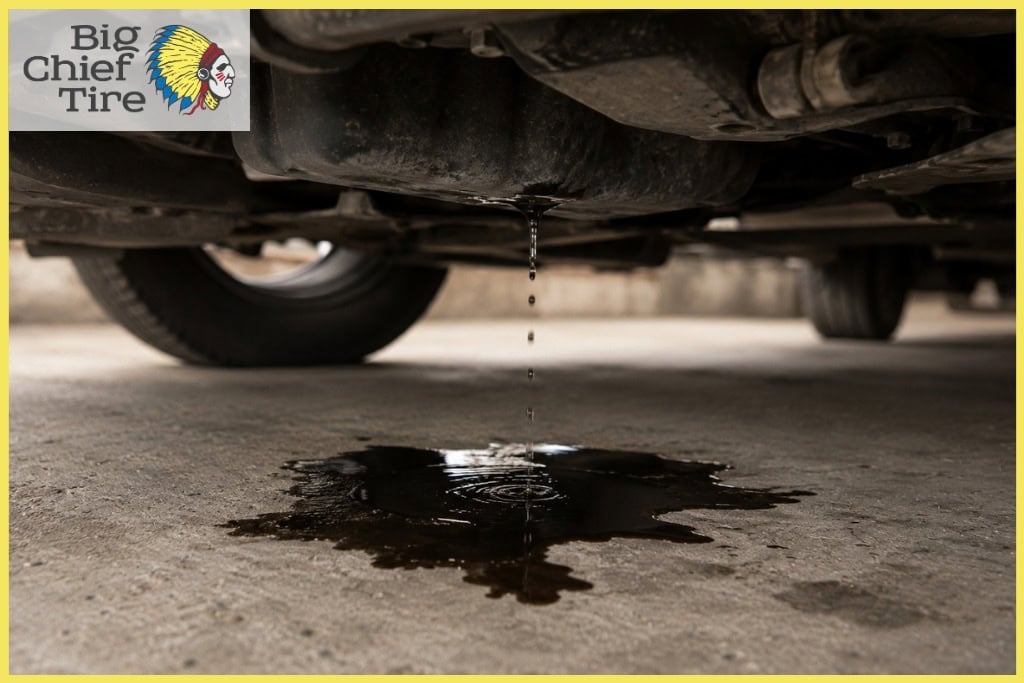
And rough roads don’t just make for a frustrating commute. They show up under your car, too, sometimes as a puddle in your driveway you weren’t expecting.
Our westside mechanics on Normandy Boulevard see fluid leaks regularly from drivers coming off these roads. The good news is not every drip is an emergency. The bad news is some are, and telling the difference before you drive another mile matters.
Here’s how to identify what’s leaking and what to do about it.
The Color Guide: What Each Fluid Tells You
The color and location of a fluid leak tell you a lot before a technician even looks at the vehicle.
Clear Water: Usually Nothing to Worry About
A puddle of clear water under the front of the vehicle on a hot day is almost always AC condensate. Jacksonville’s humidity means the AC system removes significant moisture from cabin air, and that water drips from the condensate drain under the dashboard. This is normal and requires no service.
Light Brown to Black: Engine Oil
Fresh engine oil is amber or light brown. Old, degraded oil is dark brown or black. An oil leak under the center or front of the vehicle points to a gasket, seal, or drain plug issue. Small oil leaks left unaddressed don’t stay small. Heat and engine vibration widen gaps over time, and on rough road surfaces, additional vibration accelerates this process faster than most drivers expect.
Bright Green, Orange, or Pink: Coolant
Coolant is the most visually distinctive fluid, bright colored and often sweet-smelling. A coolant leak means your cooling system is losing pressure, which leads directly to overheating. In Jacksonville’s summer heat, a slow coolant leak can escalate to engine damage faster than in cooler climates. If you see bright fluid under the front of the vehicle, get it inspected before driving further.
Clear to Light Yellow (near wheels): Brake Fluid
Brake fluid is clear to slightly yellow when new. Finding it near a wheel well or under the brake pedal area is serious. A brake fluid leak directly reduces hydraulic pressure and braking performance. This is not a monitor-and-wait situation. A vehicle with a brake fluid leak should not be driven until inspected.
Red or Pink (under center or front): Transmission or Power Steering Fluid
Transmission fluid is typically red or pink. A leak here means the transmission is losing the fluid it needs to function, and transmission repairs are among the most expensive on any vehicle. Power steering fluid is similar in color and leaks near the front of the vehicle. Either warrants prompt attention.
Dark Brown or Black (near rear of vehicle): Differential or Gear oil
Thick, dark fluid near the rear axle typically indicates a differential leak. Less urgent than brake or coolant leaks, but left unaddressed, it leads to component damage that turns a seal replacement into a much larger repair.
Why Westside Roads Are Harder on Your Vehicle Than Most
Normandy Boulevard, Lane Avenue, and Blanding Boulevard carry substantial commuter and commercial traffic across Jacksonville’s Westside. Potholes, uneven pavement, construction zones, and road debris can subject a vehicle’s underside to repeated impacts.
These conditions do not cause every fluid leak, but a hard strike can damage an exposed pan, line, hose, or protective covering. Road vibration may also make an existing leak easier to notice by allowing more fluid to escape from a worn seal or loose connection.
Jacksonville’s summer heat adds another source of stress. High temperatures accelerate the aging of rubber hoses, seals, and plastic components. When age, heat, and a strong road impact combine, a small weakness can become a visible leak.
What to Do When You Find a Leak
Don’t ignore it and hope it resolves on its own. Fluid leaks don’t seal themselves. Follow these quick steps:
- Check the color and location against the guide above
- Note the puddle size. A few drops versus a significant pool tells you something about urgency
- Check your fluid levels before driving. If oil or coolant is critically low, driving to a shop risks serious engine damage
- If brake fluid is involved, call for assistance and a tow rather than driving
For anything other than clear AC condensate, the right move is a professional inspection before a minor leak becomes a major mechanical failure.
Get Your Leak Diagnosed at Big Chief Tire – Your Trusted Westside Tire and Automotive Shop
Big Chief Tire Westside location on Normandy Boulevard serves drivers across Westside Jacksonville, right along the routes where road conditions are putting the most stress on vehicles right now.
Our certified technicians can identify the source of any fluid leak, assess its urgency, and give you an honest picture of what’s needed before any work begins. Whether it’s a simple gasket or something that needs more attention, we’ll tell you straight.
We’ve been taking care of Jacksonville drivers for over 60 years. No upselling, no surprises.
Visit our tire shop on Normandy Blvd or schedule your appointment online.